As an Amazon Associate, we earn from qualifying purchases. Some links on this site are affiliate links at no extra cost to you. Our recommendations are based on thorough research and editorial judgment.

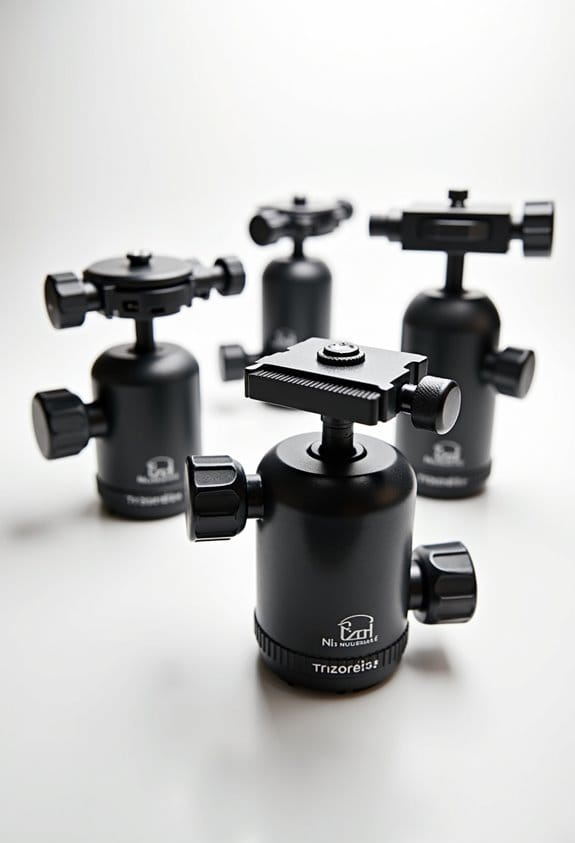
Tripod Heads Explained: Ball Heads, 3-Way Heads, and Geared Heads

Tripod heads are essential for connecting our cameras to tripods, allowing smooth tilting and panning for better composition. Ball heads offer quick adjustments in any direction and are lightweight, making them good for general photography. In contrast, 3-way heads provide precise control along three axes, ideal for architectural work. Geared heads, heavier and bulkier, allow for fine adjustments, perfect for detailed photography. If we’re curious about choosing the right one, we can explore further options available.
Key Takeaways
- Tripod heads connect cameras to tripods, facilitating smooth movements for panning and tilting to improve composition and stability in photography.
- Ball heads offer quick adjustments in all directions with a simple locking mechanism, making them ideal for landscape photography and travel.
- 3-way heads feature separate locking mechanisms for pan, tilt, and roll, enhancing precision for architectural photography and maintaining straight lines.
- Geared heads provide precise adjustments with independent knobs and degree markings, making them suitable for detailed work like architecture and macro photography.
- Choosing the right tripod head depends on your photography style, budget, and compatibility with your camera’s quick-release system.
Understanding Tripod Heads and Their Importance
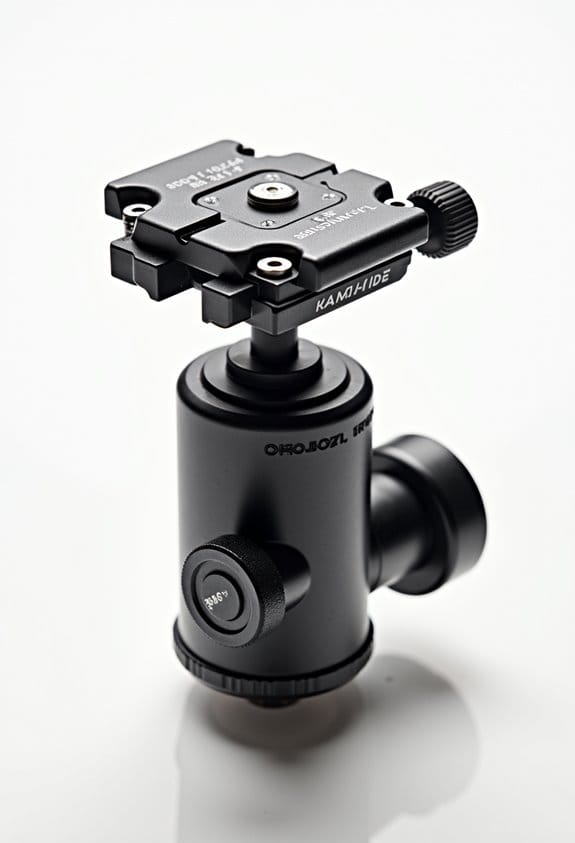
Hey there! So, let’s chat about something that often gets overlooked in photography—tripod heads. You might not think of them at first, but they are super important for helping us take great photos. Essentially, tripod heads are the connectors between your camera and the tripod legs, and they let you move the camera around easily, like tilting or panning.
There are a couple of popular types of tripod heads you should know about. For instance, ball heads make it super quick to adjust your camera angle, which is fantastic when you’re shooting on the go. On the other hand, geared heads are incredible for precise adjustments, making them a go-to for architectural photography or macro shots, where every tiny detail counts. Imagine you’re trying to capture the intricate design of a flower—having that level of control helps you get the perfect shot.
When you’re picking a tripod head, think about its load capacity too. If you have a heavier camera, you’ll want a sturdy head that can support it without wobbling. Choosing the right tripod head really boosts your composition and stability in your pictures. Understanding these options can elevate your photography game, which leads us to discuss handling lighting next! Additionally, many film scanning kits benefit from stable mounting on tripods to ensure crisp and accurate digitization.
Overview of Ball Heads
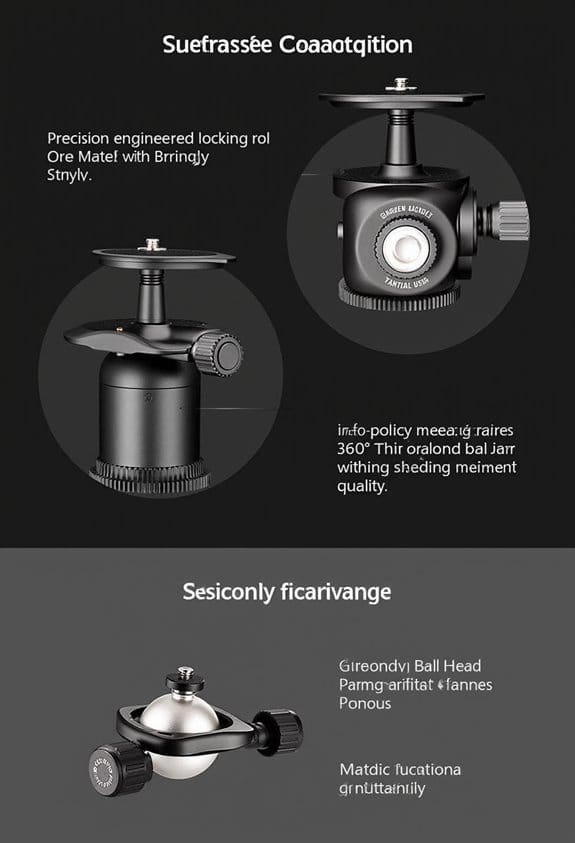
Have you ever tried using a ball head on your tripod? They’re super popular for a reason! A ball head lets you move your camera in any direction easily, which makes capturing those unique angles a breeze. Just with a simple twist to lock it in place, you can quickly recompose your shot.
Imagine you’re out shooting landscapes, and then you spot a bustling street scene nearby. With a ball head, you can effortlessly shift from one scene to the other without fussing around. However, keep in mind that while they’re fantastic for general use, they don’t have those fine-tuning adjustments that some photographers love. If you’re starting out and looking for something reliable, you might consider the Manfrotto 496 Center Ball Head. On the other hand, if you’re more experienced and want something premium, the RRS BH-55 Ball Head is a popular choice among pros.
Plus, their lightweight design makes them perfect for travel. You won’t have to worry about lugging around heavy gear, which is always a win when you’re hiking to your next photo spot. Modern photography gear also benefits from advancements such as 3-axis stabilization technology in gimbals to keep your shots steady and smooth.
So, now that you’ve got the ball head basics down, let’s talk about other tripod head options that might suit different shooting styles!
Exploring 3-Way Heads
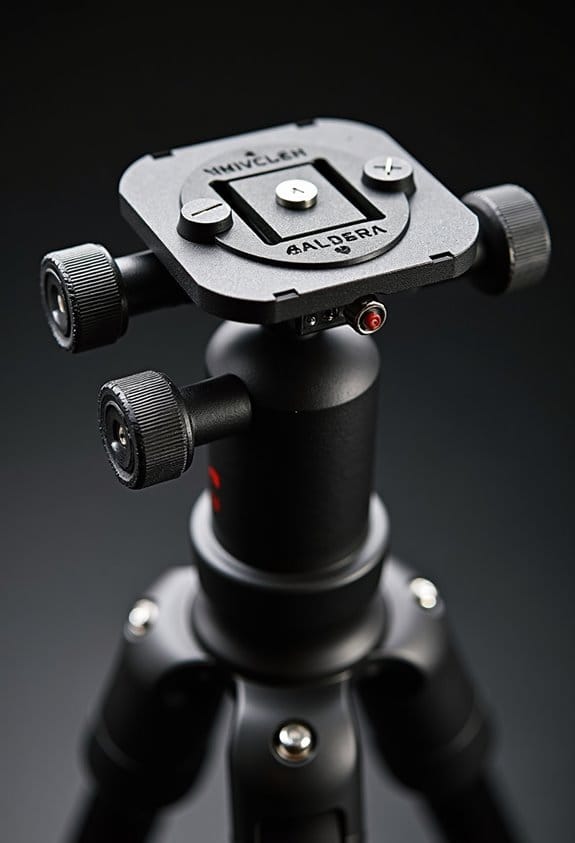
Hey there! So, let’s chat about 3-way heads, also known as pan-and-tilt heads. If you’re looking into different tripod head options, these are really worth considering. A 3-way head lets you adjust your camera along three different axes: you can pan side to side, tilt up and down, and even make those fine adjustments for precise framing. This makes them a go-to choice for architectural photography since you want to keep those lines perfectly straight.
What’s cool about these heads is that they come with separate locking mechanisms for each movement. This means you can lock your panning in place while you tweak your tilt, which is super handy when you’re trying to capture that perfect shot. For a solid budget-friendly pick, check out the Manfrotto 410. If you’re after something more premium, the Benro GD3WH is a fantastic option—it offers great performance and precision for those who are ready to invest a bit more.
3-way heads might feel a bit bulkier and take a little longer to adjust compared to ball heads, but they really shine when it comes to fine-tuning camera angles. So, if you’re after those delicate adjustments, you might want to lean towards a 3-way head for your next shoot! Speaking of which, once you’re set on the right head, let’s look at how to pair it with a sturdy tripod for the best results. Many versatile tripods, like the JOILCAN 74 Tripod, are equipped with 3-way pan heads that provide smooth rotation and excellent stability.
The Precision of Geared Heads
Hey there! So, let’s chat about geared heads for tripods. If you’re a photographer, you can appreciate the precision they offer when you’re trying to get that perfect shot. These nifty tools let you make tiny adjustments to your camera angles—think tilt, pan, and roll—all with the turn of independent knobs. This is super handy for photography styles like architecture or macro photography, where every little detail counts.
Many geared heads come with engraved degree markings, which is pretty cool because it makes it easier to frame your shot just right. Sure, they can be a bit heavier and bulkier than other tripod heads, but that added weight gives you extra stability, especially when you’re in a studio setting. Plus, the cranking mechanism allows for really smooth movements and controlled tweaks—though it might take a moment to get everything positioned just right.
But imagine you’re working on a detailed architectural photo or capturing the intricate details of a flower. With a geared head, you can make those precise adjustments without worrying about bumping your setup. So, while they might slow you down a bit, the accuracy they provide is definitely worth it for those professional projects that require attention to detail. Tripods with multi-section leg designs often complement geared heads by offering customizable height settings to further enhance shooting precision.
Ready to talk about the next piece of gear that can boost your photography skills?
Choosing the Right Tripod Head for Your Needs
When it comes to picking the right tripod head, understanding your photography needs is super important. Different types of tripod heads work better for different styles of photography, so it’s good to know what you’re after. For example, if you’re into general photography, a ball head can be a great choice because it lets you make quick adjustments—perfect for those spontaneous shots. On the other hand, if you’re focused on precise movements, like when capturing those stunning landscape shots, a 3-way head might be more your speed.
Do you shoot architecture? A geared head could really help you with those fine micro-adjustments that can make all the difference in your images. And let’s not forget about your camera weight! If you’ve got a heavier setup, you might want to consider a gimbal head for that added stability, while lighter cameras pair nicely with ball heads.
Finally, keep an eye on your budget since quality can vary quite a bit. Make sure whatever you choose is compatible with your quick-release system, which lets you switch between lenses smoothly. All in all, the right tripod head can really enhance your shooting experience and might just take your photography to the next level. So, let’s talk about the different types of tripod heads in more detail! Additionally, using equipment with proper safety features ensures durability and protection during your shoots.
Frequently Asked Questions
What Is the Difference Between a Ball Head and a 3-Way Head?
In bustling streets or serene landscapes, we find that ball heads offer quick adjustments for travel photography, while 3-way heads provide stability and precision in detailed compositions. User preferences and weight considerations often guide our choices.
Why Use a Geared Tripod Head?
We use geared tripod heads for their precision adjustments and stability improvements, especially in landscape and macro photography. Their build quality guarantees excellent weight distribution, making them compatible and easy to use for architectural applications.
What Is a 3-Way Tripod Head?
A 3-way tripod head offers precise adjustments and stability with independent controls for vertical tilt, horizontal tilt, and pan. Popular brands provide various options, each with unique features, making them ideal for landscape and macro photography.
What Is the Difference Between 2 Way and 3-Way Tripod Heads?
The difference lies in their functionality—2-way heads offer simple stability for quick shots, while 3-way heads provide precise adjustments for detailed photography. Our user preferences often depend on weight, handling characteristics, and specific usage scenarios.


