As an Amazon Associate, we earn from qualifying purchases. Some links on this site are affiliate links at no extra cost to you. Our recommendations are based on thorough research and editorial judgment.


L-Brackets Explained: Why They Matter for Tripod Shooting

L-brackets are useful tools for photographers looking to mount their cameras quickly on tripods. They allow simple changes between landscape and portrait orientations without needing to adjust the tripod head. This efficiency enhances stability and guarantees better alignment for panoramic shots. While considering their weight and cost is important, the benefits typically outweigh these concerns. If we examine the features and specifications further, we can determine the right L-bracket for our unique photography needs.
Key Takeaways
- L-brackets allow for quick transitions between landscape and portrait orientations, enhancing shooting efficiency for dynamic photography situations.
- They provide enhanced stability by centering the camera’s weight above the tripod, reducing tipping risks during shoots.
- Made from durable materials, L-brackets protect the camera body from bumps and scratches, ensuring long-term equipment durability.
- L-brackets maintain camera level for accurate panoramic shots, improving stitching accuracy and image quality during editing.
- While they enhance stability, photographers should consider the additional weight and bulk when selecting L-brackets for handheld shooting comfort.
What Is An L-Bracket?

Hey there! Have you ever heard of an L-bracket? It’s this handy little accessory that every serious photographer should consider. Imagine it as an L-shaped metal piece that you attach to your camera and then to a tripod. It gives you a solid grip without any worries about shaking or tipping over.
One of the best features of an L-bracket is how it lets you switch between landscape and portrait shots without moving the tripod head. Picture this: you’re capturing a stunning sunset and want to frame a vertical shot of the silhouette of a tree. Instead of fiddling around with adjustments, you simply rotate your camera. Plus, most L-brackets come with a quick release plate, so you can pop your camera on and off quickly—perfect for when you’re on the go.
These brackets are made for specific camera models, ensuring a snug fit that keeps the center of gravity balanced. They’re typically crafted from tough materials like aluminum or carbon fiber, which means they’re both lightweight and sturdy. In practical terms, this means you can shoot confidently without worrying about your setup. It’s a smart investment if you’re serious about your photography.
Many models also feature an Arca-Swiss quick release system to enable smooth and secure transitions between orientations.
And speaking of equipment, let’s chat about another essential piece that can really enhance your shooting experience…
Benefits of Using An L-Bracket

Hey, have you ever thought about using an L-bracket for your photography? I really think it’s a game-changer! An L-bracket makes it super easy to switch between landscape and portrait orientations, which saves you a bunch of time during shoots. Imagine you’re set up for a beautiful landscape, but then you spot a stunning vertical shot next to you. With an L-bracket, you can pivot your camera without having to readjust your tripod.
Another cool benefit is that an L-bracket helps with stability. It centers the camera weight directly above the tripod, which means it’s less likely to tip over when you’re shooting in vertical mode. Picture this: you’re on a windy day, and you want to capture a portrait shot of a model or subject. That bracket provides the added support, so you can focus on getting the perfect shot without worrying about your camera toppling over.
Plus, it keeps your camera nice and level when you’re capturing panoramic shots. No more fussing in post-editing to straighten out wonky horizons! And don’t forget, the L-bracket wraps around your camera body, offering a little extra protection from bumps and scratches. So, not only does it enhance your shooting experience, but it also keeps your gear safe.
Using an L-bracket is especially beneficial when paired with cameras that support continuous shooting, as it helps maintain stability during fast-paced shots.
In the next section, we can explore some tips on how to choose the right L-bracket for your camera setup.
Stable Portrait Orientation

You know, switching to portrait orientation can really take our photography to the next level, especially when we’re trying to capture something tall, like a tree or a full-length portrait of a person. Using an L-bracket is a great way to keep our camera stable while shooting. It attaches securely to the tripod and helps prevent any wobbling or tilting that can sometimes happen with standard setups.
When you turn your camera to portrait mode, the L-bracket does a fantastic job of keeping the center of gravity aligned. This means there’s less chance of tipping over, which is super important for keeping our images sharp and focused. For instance, if you’re photographing a tall building, having that stability means you can zoom in without worrying about any blurriness or misalignment.
Plus, L-brackets provide that extra support when we’re working with heavier camera bodies or those long lenses that we love. This support lets us relax and focus on getting that perfect shot, whether it’s a full portrait or capturing the details of a flower. Using a tripod with high weight capacities helps minimize camera shake even further for those sharper images.
Next, let’s explore how lighting can further enhance our portrait photography!
Transition Speed
You know how photographers sometimes need to flip between landscape and portrait orientations in a heartbeat? That’s where changeover speed becomes a big deal. Using an L-bracket can really help with that. It lets you pivot your camera without fiddling around with the tripod head or adjusting the legs, which can save you precious seconds, especially when the light is just right during golden hour.
For instance, if you’re shooting a wedding and the couple is in a great spot, you want to capture every moment without missing a beat. With an L-bracket, you can easily switch from vertical to horizontal shots while keeping the same composition, which is super handy. This means less time adjusting and more time focusing on getting that perfect shot.
Plus, when you’re out photographing wildlife, speed is crucial. You don’t want to miss that fleeting moment of a bird taking flight. An L-bracket makes it easier to adjust and shoot quickly, allowing you to put all your energy into capturing the beauty of the moment. So, it’s all about working smarter and staying in the action!
The Canon 90D’s 45-Point All Cross-Type Autofocus System helps you achieve that quick focus adjustment when transitioning between orientations, making your shots even sharper and more precise.
Panorama Accuracy
Capturing a perfect panorama really hinges on accuracy, and that’s where an L-bracket comes in. Imagine you’re out in the mountains, trying to photograph a stunning landscape. An L-bracket helps you pivot your camera right around the lens’s nodal point, which is crucial for getting those straight horizons.
When you’re panning, keeping your camera level is key. You definitely don’t want those pesky upward or downward drifts ruining your shots. Think about it: if you’re capturing a sunset view, maintaining a level horizon ensures the sky and land look seamless when stitched together later.
Another great thing about using an L-bracket is that it keeps your camera’s rotation point consistent in landscape and portrait orientations. This means you can switch between the two without worrying about misalignments, which can save you a ton of hassle during the editing phase. So the next time you’re out shooting panoramas, that little L-bracket could be the tool that makes your images stand out beautifully!
Using an L-bracket in combination with a reliable tripod can further enhance image stability and accuracy during panorama shooting.
Protection for Your Camera
Hey there! When we’re out snapping photos of our favorite scenes, protecting our camera gear really should be at the top of our list. An L-bracket is a handy tool that wraps around the left side and bottom of your camera. It’s like giving your gear a suit of armor that helps shield it from those unexpected drops or bumps we might run into while we’re shooting.
For instance, if you’re climbing over rocks to get that perfect shot, having an L-bracket can make a huge difference. Its sturdy metal build helps prevent damage from scrapes and minor falls. Plus, when you set your camera down on an uneven surface, the L-bracket keeps it secure and prevents those annoying scratches that could ruin its sleek look.
Another great feature is that it helps protect those vulnerable spots on your camera when you quickly switch between landscape and portrait orientations. Trust me, investing in a solid L-bracket is a smart move; it’ll probably be cheaper than any repair costs you’d face if something goes wrong. Speaking of keeping things safe, let’s chat about other gear protections that can make your photography life easier! Using a reliable camera bag with customizable compartments and weather-resistant materials can further safeguard your equipment.
Downsides Of An L-Bracket
Hey! So, let’s chat about L-brackets for cameras. They definitely offer some great protection and added functionality, but there are a few downsides we should keep in mind. First off, if you’re someone who enjoys shooting handheld, you might find that the extra weight and bulk of an L-bracket can be a bit cumbersome. For example, if you’re out on a hike trying to capture some stunning landscapes, that extra gear can make a real difference in how comfortable it feels to shoot.
Then there’s the price tag. Good-quality L-brackets typically fall in the $100 to $200 range, which might sting a bit for hobbyists who are already trying to stretch their budgets. Also, switching to an L-bracket might not be as straightforward as it seems. You might have to spend some time learning how to use a new quick-release system, which can slow you down when you’re in the moment.
Lastly, it’s super important to check if the L-bracket you’re considering is compatible with your tripod. If it doesn’t fit right, you could find yourself in a tricky situation when you’re ready to shoot. Sure, there are cheaper options out there, but they often skimp on quality, and you don’t want that impacting your photography. So, it’s something to think carefully about before making a decision! What’s next for us to explore in the world of camera gear? Remember, just like choosing the right sling bag, considering compatibility and usability is key to a smooth photographic experience.
Weight and Bulk Considerations
Hey there! Let’s chat about L-brackets and why they can be a bit of a mixed bag when it comes to weight and bulk. You see, while they do add a little heft to your camera setup, that extra weight can be a dealbreaker for those of us who love traveling light, especially with mirrorless cameras.
Now, it’s true that high-quality L-brackets might weigh more—they’re built tougher, which means they can provide much better stability and support while shooting. Take, for example, being able to switch from portrait to landscape quickly without losing your balance. But, on the flip side, that extra bulk can make it tricky to shoot handheld, especially if you’re in a hurry to capture spontaneous moments.
When using an L-bracket, it’s important to consider how it might affect subject motion considerations, as added weight can influence camera handling during fast-moving scenes.
Cost Considerations
When you’re thinking about L-brackets for your camera setups, cost definitely plays a big role. Typically, high-quality, camera-specific L-brackets fall in the range of $100 to $200. It might sound like a lot for gear, but if you’re serious about improving your photography, it’s a worthy investment. Now, you could go for those cheaper universal brackets, but I’ve found they often cut corners on quality and usability. That can really throw a wrench into your shoots when things don’t line up properly.
Then there’s the ball head to consider too. If you want something that works nicely with that L-bracket, you’re probably looking at another $100 or so. Sure, the upfront cost can seem steep, but think of it this way: the right gear can make your shooting more efficient, saving you time in editing later on. For those of us watching our budgets, checking out used equipment or scouting different retailers can lead to some great finds without sacrificing performance.
Doesn’t it feel rewarding to find good gear at a great price? With a little patience, you can equip yourself well without breaking the bank!
How to Choose an L-Bracket for Your Camera
Choosing the right L-bracket for your camera can be a bit tricky, but it doesn’t have to be! Start by looking for an L-bracket that’s made specifically for your camera model. This ensures a snug fit, letting you reach all those buttons and controls without hassle. For example, if you have a Canon EOS R5, get an L-bracket tailored for that camera to avoid any awkward adjustments.
Next up, think about materials. Aluminum and carbon fiber are your best bets because they’re both strong and lightweight—perfect for when you’re out snapping photos. A solid L-bracket should balance your camera right over the tripod, which is crucial. It helps keep your setup stable and reduces the chances of tipping over when you’re shooting at different angles.
Also, look for an L-bracket with a quick-release plate system. This feature allows you to switch between landscape and portrait orientations in a heartbeat, making your shooting process smoother. Just keep an eye on your budget; most good quality L-brackets fall in the $100 to $200 range. It’s worth weighing the features you need against what you’re willing to spend.
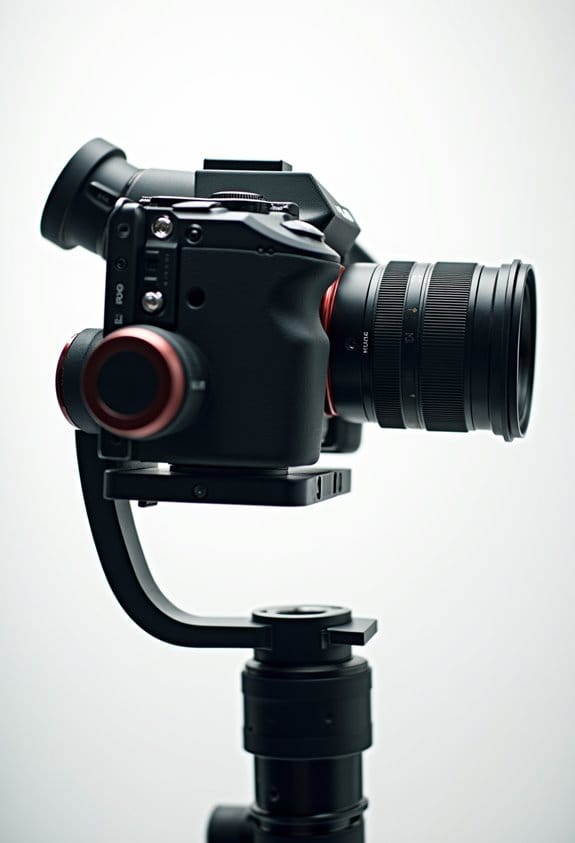
Additionally, consider pairing your L-bracket with 3-axis stabilization technology from a gimbal stabilizer to achieve even smoother shots when moving between tripod setups.
Ultimately, considering all these factors will help you make an informed choice that suits your filming style and needs. So, once you find that perfect L-bracket, you’ll be all set to tackle your next photography adventure!
Frequently Asked Questions
What Is the Purpose of an L Bracket?
An L-bracket’s purpose is to enhance our photography experience, offering various materials, types, and sizes for compatibility with different camera brands. Accessories expand functionality, ensuring stable, quick shifts between landscape and portrait shooting orientations.
How to Use an L Bracket on a Tripod?
When we attach the L-bracket, we guarantee proper stability and flexibility. By aligning it with the tripod, we gain shooting angle advantages, easy orientation shifts, and protective features that enhance our photography experience.
What Is the Camera L Bracket For?
The camera L-bracket’s for improving stability during vertical shooting, allowing quick adjustments for landscape photography. It enhances grip and supports accessory mounting, ensuring our gear’s secure and balanced, making every shot more successful.
What Are the Advantages of L-Mount?
Using an L-mount is like having a reliable friend at a photoshoot. We enjoy L mount benefits like stability and versatility, plus its durable design guarantees great compatibility with our camera, enhancing our shooting experience every time.