As an Amazon Associate, we earn from qualifying purchases. Some links on this site are affiliate links at no extra cost to you. Our recommendations are based on thorough research and editorial judgment.


Softbox Vs Umbrella: Choosing a Modifier for Portraits

When we choose between softboxes and umbrellas for portrait photography, we should consider their unique characteristics. Softboxes produce controlled, soft light that flatters skin tones and reduces shadows, making them ideal for professional portraits. In contrast, umbrellas offer a more diffused light, perfect for ambient setups but may result in spill. Both options have advantages, depending on our desired effect. Exploring these modifiers can lead us to make more informed choices for our photography needs.
Key Takeaways
- Softboxes deliver soft, controlled light with gentle transitions, ideal for flattering portraits, especially for older subjects.
- Umbrellas are budget-friendly and versatile, allowing for both shoot-through and bounce setups for different lighting effects.
- Choose softboxes for precise light direction and beautiful rectangular catchlights mimicking natural light, enhancing skin texture.
- Opt for umbrellas for a broader, more diffused light that fills small spaces, but be cautious of potential light spill.
- For beginners, starting with budget-friendly umbrellas is effective; however, consider investing in durable softboxes for professional-quality portraits.
Understanding Light Modifiers

Hey! If you’re looking to capture that perfect portrait, getting a good grasp of light modifiers is super important. Light modifiers, like softboxes and umbrellas, can really shape the light you’re working with, and that makes a huge difference in how your images turn out.
So, let’s break it down. Softboxes create this lovely, soft light that flatters your subjects’ features, making those highlights pop and adding natural catchlights in their eyes. It’s like a gentle hug of light! Plus, they help you direct the light exactly where you want it without it spilling all over the place—perfect for focused portrait shots. Imagine setting one up to highlight your friend’s smile while creating a beautifully lit effect around them.
Now, umbrellas are another fantastic option! They’re lightweight and super versatile, giving you two setups: shoot-through and bounce. When you shoot through an umbrella, you get this nice diffused light that wraps around the subject. On the flip side, if you bounce the light off, it spreads out broadly, making it a great fill light for those outdoor shoots on a sunny day. And the catchlight from an umbrella has a round shape that can really add character to your portraits.
Ultimately, whether you choose a softbox or an umbrella really depends on the vibe you want to create. It’s all about experimenting and seeing which one helps you achieve your desired effect. What do you think? Ready to play with some light? Keep in mind that the right lighting tools, such as those with a high Color Rendering Index, will ensure your portraits capture true, vibrant colors.
Benefits of Softboxes
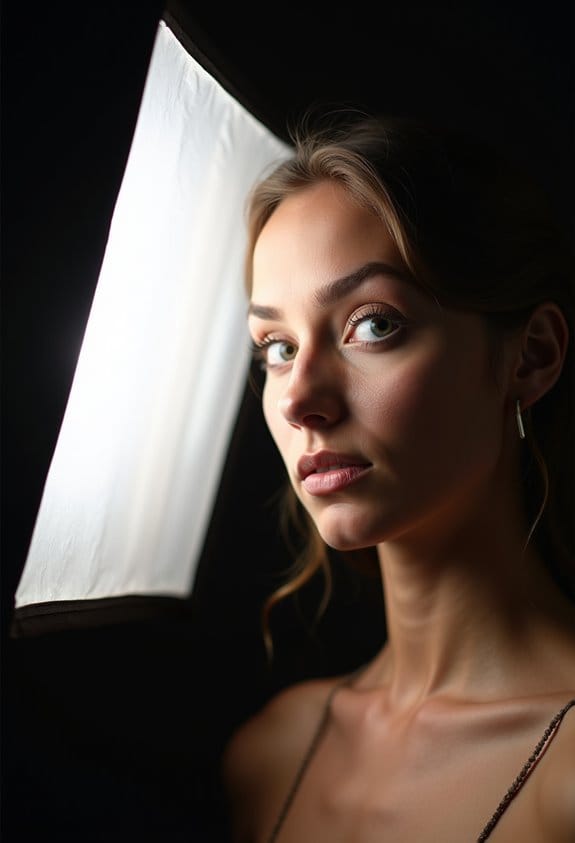
Have you ever wondered why softboxes are so popular in portrait photography? Well, they really shine when it comes to controlling light. These modifiers give you great control over where the light falls, so you can minimize spill and shape the light exactly how you want on your subject. For example, using a larger softbox can create that lovely, soft light we all appreciate, with gentle transitions between highlights and shadows. This really elevates the quality of your portraits!
One of the cool things about softboxes is that they create these beautiful rectangular catchlights in your subject’s eyes, which remind us of lovely natural light coming through a window. It’s a small detail, but it can really enhance the overall look of your image. Plus, they help manage the background lighting, making it simpler to set your subject apart from their surroundings.
And if you’re photographing older subjects, softboxes are particularly beneficial. They soften harsh light and help reduce those unflattering shadows that can sometimes distract from a person’s features. Overall, using a softbox not only improves your lighting technique but also enhances the emotional connection in your photos. Additionally, photographers on the go often find that lightweight and portable bags with efficient storage solutions make carrying their softbox equipment much easier. Now that we’ve covered softboxes, let’s talk about other lighting setups you might want to explore!
Advantages of Umbrellas

Hey there! You know, when it comes to portrait photography, a good umbrella can really transform your shots. While some folks might lean towards the precision of softboxes, umbrellas bring a bunch of perks to the table that make them a fantastic option.
For starters, they’re super budget-friendly—most umbrellas are priced under $50. So if you’re just getting into photography or trying to save some cash, they’re perfect. Plus, you can use them in two ways. You can shoot through them for softer light or bounce light off them for a different effect. This flexibility lets you play around with your lighting until you find what looks best.
Another cool thing about umbrellas is that they create those lovely round catchlights in your subjects’ eyes, giving your portraits that soft, inviting glow. The highlights are gentle and pleasing, which is a big step up from the harsher, more clinical look that other modifiers can produce. And let’s not forget how easy they are to set up and carry around. Whether you’re doing a quick session in a park or shooting at a friend’s house, you can be ready to go in just a few minutes. However, unlike softboxes that provide controlled light directionality, umbrellas generally produce less focused light, which can be a consideration depending on the portrait style you want.
Comparing Light Quality: Softbox Vs Umbrella
When it comes to choosing between a softbox and an umbrella for light quality in portrait photography, it really boils down to the effect you’re aiming for. Softboxes are great for controlling the direction of light and they create those lovely rectangular catchlights that mimic natural window light. This can be especially flattering for older subjects because it helps soften any harsh shadows and brings out the beauty in their skin texture.
On the flip side, umbrellas—especially shoot-through ones—provide a diffused light that is similar to round softboxes. They can create a nice, even spread of light but might spill over a bit more, making it harder to control. For instance, if you’re shooting in a smaller space and want to fill the area with light, an umbrella can be really handy. But just remember, you might find yourself adjusting your exposure settings a bit more than with a softbox.
In the end, it all comes down to what look you’re after in your portrait. Are you aiming for soft and controlled, or more spread out and ambient? That’s the question to keep in mind as you set up your shot! When working on location or in versatile shooting environments, considering portable lighting kits can greatly enhance your lighting setup flexibility.
Umbrella Lighting Techniques
Using umbrella lighting in portrait photography is a fantastic way to elevate your images! There are two main ways we can work with umbrellas: shoot-through and bounce. With a shoot-through umbrella, the light gets diffused, creating a beautiful soft effect on your subject’s skin that makes edges look gentle and flattering. It’s perfect for quick setups since it typically requires less tweaking with exposure settings.
On the other hand, bounce umbrellas reflect the light, which can sometimes create a sharper contrast but still gives a nice, effective lighting option. The beauty of this is that larger umbrellas throw out more light, filling your scene with a warm ambiance. Plus, have you noticed how the round catchlight from umbrella lighting adds a spark to your subject’s eyes? It really enhances the overall appeal of your portraits!
And another great thing? Umbrellas are budget-friendly, often available for under $50, making them an excellent choice for newcomers to photography. So, whether you’re just starting out or looking to refine your skills, umbrella lighting can be an easy and effective tool to explore. Now, let’s chat a bit about positioning your lighting for the best results!
For those interested in expanding their photography toolkit, understanding the importance of manual control options can significantly improve both portrait and astrophotography results.
Softbox Lighting Strategies
When it comes to lighting our portraits, softboxes really shine, giving us great control and versatility. Think of them as big, soft lamps that wrap our subjects in gentle light, making everything look much nicer—especially for older subjects, who benefit from that flattering touch. For example, if you set up a softbox close to your model, it reduces those harsh shadows we sometimes get from direct flash.
Another cool thing about softboxes is how they let us direct light exactly where we want it. This means less light spilling onto backgrounds or other areas we’re not focused on. When you look into your subject’s eyes and see those beautiful rectangular catchlights, it actually mimics natural window light—a simple detail that really enhances the image. So for professional portraits, using softboxes not only helps create a polished look but also gives us a lot of creative control over our lighting.
Thinking about how to set up your presentation next? Let’s explore some specific techniques you can use with softbox lighting to get the best results for different styles and settings! Using a light with a high CRI rating ensures your colors stay true and natural, enhancing the overall quality of your portraits.
Use Cases for Beauty Dishes
Hey there! Let’s chat about beauty dishes and how they work wonders in portrait photography. Unlike softboxes, beauty dishes create a distinct kind of light that really highlights facial features. They’re perfect for glamour and beauty shots because that focused light makes those lovely catchlights in the eyes pop.
Imagine positioning a beauty dish just right—this can give you stunning shadows and highlights that enhance texture in skin and hair. For example, when shooting a close-up portrait, a beauty dish can add a nice depth that really brings the subject to life, especially when the light gently skims across their cheekbones.
The cool thing about beauty dishes is the control you get. You can direct that light really precisely, and it gives you a nice contrast that adds a bit of drama to your images. Ready to learn about another lighting option? Let’s jump into the world of reflectors next!
For photographers using beauty dishes in studio setups, incorporating quick-release clamps can be incredibly helpful for adjusting modifiers efficiently and securely.
Factors to Consider When Choosing a Modifier
When it comes to portrait photography, choosing the right modifier can really change the game. You want to think about how different modifiers affect light quality—not all lighting is created equal! For instance, if you’re weighing the options between softboxes and umbrellas, consider what you need. Softboxes give you that beautiful, soft light perfect for portraits because they control where the light goes and create smooth transitions. On the other hand, umbrellas spread light more broadly and are super easy to set up, which is great if you’re on the go.
Another thing to keep in mind is your budget. Umbrellas are usually much more affordable, so if you’re just starting out or working with limited funds, they’re a solid choice. But if you’re serious about getting those dreamy portraits, investing in a quality softbox can pay off. For example, softboxes work wonders as your main light, while umbrellas can fill in those shadows beautifully. So, think about what effects you want to create—this will help narrow down your choices and lead you to the right modifier for your vision. Additionally, using a camera with a fast autofocus system can help capture sharp images when working with dynamic lighting setups.
Common Mistakes in Modifier Selection
Choosing the right modifier for portrait photography can feel a bit tricky, especially when you’re just starting out. One common mistake photographers make is opting for square softboxes. While they work well for product shots, they don’t always flatter people the same way. Instead, think about using round modifiers, like octo-domes. They’re fantastic because they create catch lights in the eyes that add a lively sparkle to your subjects.
Another pitfall is judging light sources based only on how they look. The quality of light is key! For instance, shoot-through umbrellas can give you that soft, even glow you get from round softboxes, making your portraits pop without harsh shadows. On the other hand, bounce umbrellas can sometimes create those harsh highlights we all want to avoid. And hey, if you’re working with a budget, don’t forget about umbrellas. They can be super handy for quick setups and can be found for under $50, making them a great addition to your gear. Keep in mind that using a flash with a stable color temperature can significantly help maintain consistent lighting quality in your portraits.
Budget-Friendly Modifier Options
When you’re diving into portrait photography on a budget, finding the right modifiers is key. Trust me, you don’t have to spend a fortune to get great results. Take umbrellas, for example! They’re super affordable—often under $50—and they’re a breeze to use. Just pop one open and you can instantly soften your light, which is essential for flattering portraits.
A great choice is a 160cm deep white reflective umbrella. It can give you beautiful, soft light that rivals pricier options like the Octabox 150, which can set you back a couple of hundred bucks! If you’re just starting out, I recommend a shoot-through umbrella. It allows you to get creative without a big investment, perfect for practicing those photography skills.
As you become more confident and want to elevate your game, you can think about upgrading to softboxes. But honestly, starting with budget-friendly modifiers like these is a smart and practical move. It sets you up for success without burning a hole in your wallet—so have fun experimenting! Also, remember that having durability and weather resistance in your gear can protect your investment as you shoot in different environments.
Frequently Asked Questions
Is a Softbox Better Than an Umbrella for Photography?
In our experience, a softbox offers advantages like better light control and flattering softness, perfect for portraits. However, we appreciate an umbrella’s portability for easy setup and versatility when experimenting with different lighting styles.
What Are the Pros and Cons of Umbrella Lights?
Umbrella lights offer versatility with both bounce and shoot-through types, providing great light diffusion and lovely catchlights. Yet, they can create unwanted light spill and less control. We weigh their pros and cons for our photography needs.
What Size Softbox Is Best for Portraits?
For portrait lighting, we often find that a softbox size of 24-36 inches works best. It balances light softness and control, helping us achieve that flattering, natural look we desire in our subjects.
How to Use Softbox Lighting for Portraits?
To use softbox lighting for portraits, we should position it at a 45-degree angle, ensuring proper softbox placement. Using light diffusion techniques, we can achieve flattering shadows and even illumination, enhancing our subject’s features beautifully.