As an Amazon Associate, we earn from qualifying purchases. Some links on this site are affiliate links at no extra cost to you. Our recommendations are based on thorough research and editorial judgment.

IBIS + Lens IS Explained: How Stabilization Systems Work Together

IBIS, or In-Body Image Stabilization, and Lens IS, or Optical Image Stabilization, work together to improve image clarity by reducing camera shake. IBIS adjusts the camera’s image sensor in multiple directions, offering up to 8 stops of stabilization. On the other hand, Lens IS stabilizes specific movements using internal elements, achieving around 4 to 6 stops. These systems are most effective in low-light conditions and with longer lenses, and utilizing them properly can greatly enhance our photography results. More insights await us if we explore deeper.
Key Takeaways
- IBIS adjusts the image sensor in five directions, providing up to 8 stops of stabilization, ideal for low-light and handheld shooting.
- Lens IS stabilizes primarily against up/down and side/side movements, achieving 4 to 6 stops of stabilization for clearer images.
- Combining IBIS and Lens IS can result in stabilization up to 6.5 stops, enhancing video and photo clarity in challenging conditions.
- IBIS uses built-in gyroscopic sensors for real-time sensor adjustments, while Lens IS employs gyroscopic sensors for internal lens movements.
- Different modes in IBIS and Lens IS tailor stabilization to specific shooting situations, improving performance across varied lenses and styles.
Understanding IBIS and Lens IS
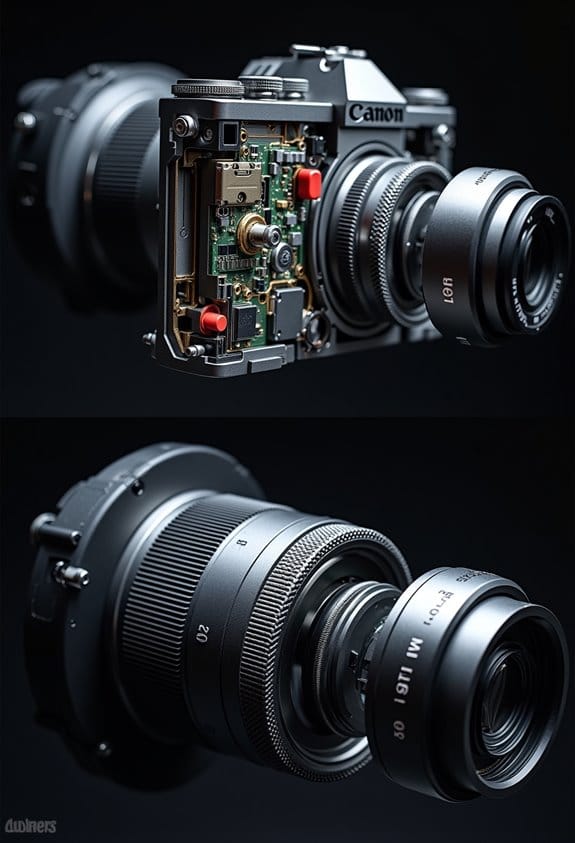
You know, when we chat about image stabilization in photography, it’s super important to get the scoop on In-Body Image Stabilization (IBIS) versus Lens Image Stabilization (Lens IS). Imagine IBIS as a tiny superhero inside your camera—it’s like a little dance that counteracts your hand movements by adjusting the image sensor in five different directions: up and down, side to side, and even a bit of rotation. On the flip side, Lens IS acts more like a safety net for those little shakes, mainly working on the up-and-down and side-to-side movements using special lens elements.
IBIS uses motion sensors to detect when the camera is moving and then springs into action to balance things out, which is a big help when you’re shooting without a tripod. For instance, if you’re taking a photo of a bustling street scene while standing on a busy sidewalk, IBIS helps keep your shot sharp despite all the movement around you. Now, when you pair IBIS with Lens IS, you can achieve some serious stabilization—like getting up to 6.5 stops of clarity in your images, which is pretty impressive! Plus, you can tweak the stabilization settings to fit whatever you’re capturing, whether it’s a sunset or a candid moment at a gathering. Many mirrorless cameras, like the Canon EOS RP, also include built-in optical stabilization to help achieve smoother footage.
How Lens IS Works
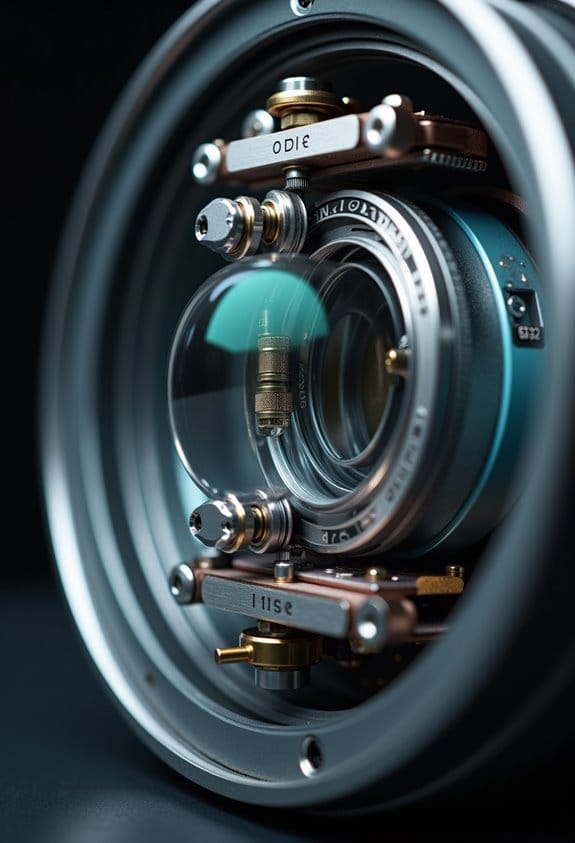
Have you ever heard of Lens Image Stabilization, or Lens IS? It’s pretty fascinating! Basically, Lens IS works by adjusting the elements inside the lens to offset any movement from your hands. Think of it as your lens having a built-in stabilizer that helps keep your shots steady, especially when you’re photographing in less-than-ideal conditions, like during a sunset or at a concert.
This technology relies on gyroscopic sensors that detect shakes from hand tremors or vibrations. When you start to shake the camera, the lens’s microprocessor kicks in and makes quick adjustments to keep the image sharp. For example, if you’re shooting at a slower shutter speed, which is common in low light, you can expect about 4 to 6 stops of stabilization. This means you can avoid that annoying blur and capture clearer images, even if your hands aren’t rock steady.
However, it’s important to note that Lens IS primarily handles pitch and yaw movements; it won’t correct for roll or vertical movement. So, while it’s a great feature, it’s not a one-size-fits-all solution for stabilization. You might want to consider using a tripod or other stabilization methods if you’re dealing with more significant movement. That said, it’s a handy tool in your photography kit when you’re out there capturing moments!
Many APS-C DSLR cameras, such as those with Canon EF-S lenses, incorporate Lens IS to enhance image quality, especially under low-light photography conditions.
The Mechanics of IBIS
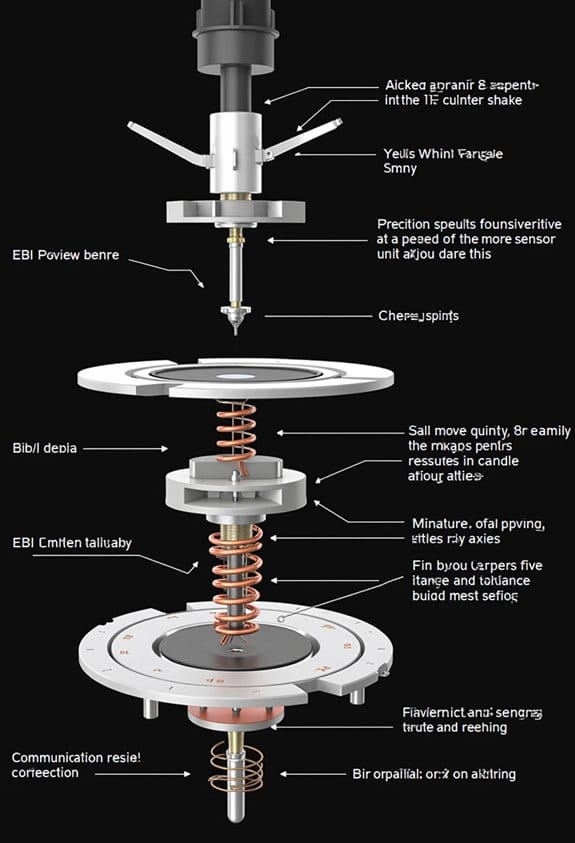
Hey there! So, let’s chat about in-body image stabilization, or IBIS for short. It’s a pretty nifty tech that really makes a difference in how we take photos, especially when our hands aren’t as steady as we’d like. Think about it: when you’re snapping pictures in a crowded market or during a sunset hike, a little shake is almost inevitable. IBIS comes to the rescue by shifting the camera’s sensor around to cancel out those wobbles, whether it’s a little tilt, a sideways sway, or that slight rotation we all do.
Here’s how it works: the camera has these built-in gyroscopic sensors that pick up any movement. If it senses a shake, it sends a signal to tiny motors that move the sensor in the opposite direction. The best part? You can benefit from this stabilization no matter what lens you’re using—even if your lens doesn’t have its own stabilization features. This means you can shoot landscapes at dusk or take portraits with longer zooms without needing to worry too much about blurriness, gaining up to 8 stops of stabilization! Cameras like the Panasonic LUMIX G85 showcase how dual image stabilization works by combining IBIS with lens-based stabilization for even better results.
Interaction Between IBIS and OIS
Hey! So, let’s chat about IBIS and OIS. Both of these image stabilization systems are fantastic for reducing camera shake, but they each have their own special advantages. IBIS, or In-Body Image Stabilization, is great at handling low-frequency shake, like those small jitters when you’re hand-holding your camera. Meanwhile, OIS, which stands for Optical Image Stabilization, really shines when you’re using longer lenses, helping to stabilize the image even more effectively.
When you use both IBIS and OIS together, you actually boost your stabilization ability. For instance, if OIS alone usually gives you about 4 stops of stability, combining it with IBIS can take you up to 6.5 stops! That’s huge for those moments when light is low and you want clear, sharp shots without the blur. Just remember, when OIS is on, it usually takes priority and overrides IBIS.
This means you can choose the best stabilization for your situation. For example, if you’re shooting a sunset with a telephoto lens, activating OIS will really help you avoid any shake. But if you’re walking around during the day with a standard lens, enabling IBIS could do the trick. It’s all about knowing your gear and adjusting it to get the best results in different environments. So, next time you’re out shooting, think about how these systems can work together for those perfect shots! Using a mirrorless gimbal with advanced 3-axis stabilization can further enhance the smoothness of your footage.
Modes of Operation for Stabilization
So, have you ever wondered how IBIS (In-Body Image Stabilization) and OIS (Optical Image Stabilization) work together to give us those super steady shots? It’s pretty fascinating! IBIS can either run continuously to keep your images sharp or only kick in when you press the shutter button halfway. This can be a game-changer when you’re shooting something fast-paced.
Now, if you mix IBIS with OIS—a common feature in many modern lenses—you get even more control over how you stabilize your shots. For example, if you enable OIS from the lens switch, it takes over and switches off IBIS. OIS also offers different modes, like a standard mode for regular shooting or a panning mode that helps when you’re tracking moving subjects. This is especially handy with longer lenses where even the slightest shake can ruin a shot.
With these two systems working together, you can achieve up to 6.5 stops of stabilization! That means clearer images even in tricky conditions. Whether you’re shooting a sunset or a bustling street scene, this combo gives you the confidence to go for it. And speaking of tricky situations, let’s talk about how different environments can affect your shooting stability next!
Additionally, many cameras now feature advanced Dual Pixel CMOS AF technology, which complements stabilization by ensuring precise autofocus even during movement.
Compatibility and Customization Options
When you’re using our camera setups, it’s super important to get a grip on how IBIS (In-Body Image Stabilization) and lens stabilization work together. Think of them as teammates – both help keep your shots steady, especially in tricky conditions. For instance, if you’re shooting a video while walking, that combo can really smooth things out.
Now, when you have both systems activated, the lens’s built-in stabilization takes charge. So, if you flip the OIS switch on your lens, it automatically turns off IBIS from the camera menu. It’s handy because you can customize how you want them to work. You can choose continuous stabilization for a steady shot while you’re framing your scene or opt for shooting-only modes if you want to save some battery.
And if you’re using a non-stabilized lens, don’t worry! You can simply switch off IBIS through the camera menu, putting you in full control. It’s worth remembering that different lenses will interact in their own way with IBIS, so knowing how they work together is key to getting great results. Additionally, lens design and the weight and build quality can impact the effectiveness of stabilization.
So, let’s chat about how to choose the best lens for your needs next!
Real-world Performance and User Experiences
Hey there! So, let’s chat about how IBIS (In-Body Image Stabilization) and OIS (Optical Image Stabilization) work together. It’s pretty cool because when they’re combined, they really help to reduce camera shake, especially when you’re shooting in low-light situations or using long lenses. Imagine capturing a sharp sunset after a hike without worrying about your hands being a bit shaky—that’s the magic of this combo!
Many photographers have noticed that they can get up to 6.5 stops of stabilization when using both systems together. This is a big deal because it means you can take clear photos even with third-party lenses that don’t have built-in stabilization. However, I should mention that when you’re making quick movements—like trying to photograph a kid running around—you might accidentally mis-frame your shots. It’s a bit of a dance; you must work with the stabilization, not just rely on it completely.
One way to improve your shooting experience with these systems is by using a DSLR video monitor which provides clear visuals and professional monitoring tools to help you frame and expose your shots more precisely.
Frequently Asked Questions
Do Ibis and Lens Stabilization Work Together?
Yes, IBIS and Lens stabilization work together to enhance stabilization performance. By combining their strengths, we can enjoy significant stabilization benefits in various shooting techniques. User experiences show improved gear compatibility across different camera brands, making hybrid stabilization advantageous.
How Does the Ibis System Work?
Ever struggled with shaky shots? Our in-body image stabilization (IBIS) system uses sensor movement and electronic control to boost stabilization accuracy, enhancing low light and video performance, while balancing weight and battery impact across various shooting modes.
What Is Ibis Stabilization?
IBIS stabilization offers in-body benefits by compensating for unwanted movement, enhancing gear compatibility. By understanding different stabilization types, we can compare systems, use optical advantages, and adapt shooting techniques for various photography styles and effective applications.
How Does Lens Stabilization Work?
In our quest for perfect photographs, lens stabilization combats camera shake through innovative optical design and technology. It adjusts elements against sensor movement, ensuring image clarity and allowing us to shoot at lower shutter speeds with various angles.


