As an Amazon Associate, we earn from qualifying purchases. Some links on this site are affiliate links at no extra cost to you. Our recommendations are based on thorough research and editorial judgment.


Photo Backup Strategy Explained: The (3!-!2!-!1) Rule Made Practical

A solid photo backup strategy is essential for protecting our memories. We recommend the 3-2-1 backup rule: keep three copies of our data—one original and two backups—using at least two different storage types, like external drives and cloud storage. It’s important to store one backup off-site, preventing local disaster losses. Regularly updating backups and organizing files guarantees easy access. By following these steps, we can better safeguard our photographs and learn more about effective strategies.
Key Takeaways
- The 3-2-1 backup rule involves keeping three copies of your photos: one original and two backups to ensure data safety.
- Utilize two separate media types, like external hard drives and cloud storage, to enhance data security and reliability.
- Store one backup off-site to protect against local disasters, ensuring your images are safe even in emergencies.
- Immediately back up photos after shooting to minimize the risk of losing important memories and reduce recovery stress later.
- Regularly verify and update your backups to ensure they are functional and current, preventing potential data loss.
Understanding the Risks of Data Loss

Hey, have you ever thought about the risks of losing your digital photos? It’s something we often take for granted, but data loss can happen for all sorts of reasons. Picture this: your hard drive suddenly crashes, or maybe you accidentally delete a folder full of memories. It’s more common than you think!
To keep your precious pics safe, it’s super important to have a solid backup plan right from the start. For instance, using an external hard drive to save copies or using cloud storage services can really save your skin. Imagine being a photographer who relies on their portfolio; losing those images would be heartbreaking! Plus, it’s not just about backing up – regularly checking to make sure your backups are actually working is crucial. Relying on a backup without confirming it’s there can lead to some really tough moments when things go wrong. For photographers, using reliable equipment like a Canon EOS Digital Rebel 300D can help ensure that your original images are captured with quality and preserved safely.
Emotional Value of Photographs

You know, photographs really hold a special spot in our lives, don’t they? They capture those significant moments that mean so much to us, packed with emotional weight. Think about it—every time you look at a picture from a wedding or a family holiday, it’s like a little time capsule bringing back all those cherished memories.
But what happens when you lose those photos? It can be truly heartbreaking. Imagine having no way to look back at that beach vacation with your friends or the family reunion where everyone was together. That’s why having a solid backup strategy is essential. For example, you might consider using cloud storage or an external hard drive to keep your photos safe. That way, if your computer crashes or you accidentally delete something, you won’t lose those irreplaceable memories.
And it’s not just about personal memories; for photographers, preserving client images is vital too. Their professional reputation and pride are on the line with every photo shoot. So, taking the steps to protect those visuals is crucial. It brings a sense of peace, allowing everyone to focus on creating new memories instead of worrying about past ones. Speaking of new experiences, let’s talk about how we can easily document those moments we want to remember forever!
Having the right camera accessories can also help ensure your photographs are captured with the best quality and protected throughout your workflow.
Professional Considerations for Photographers
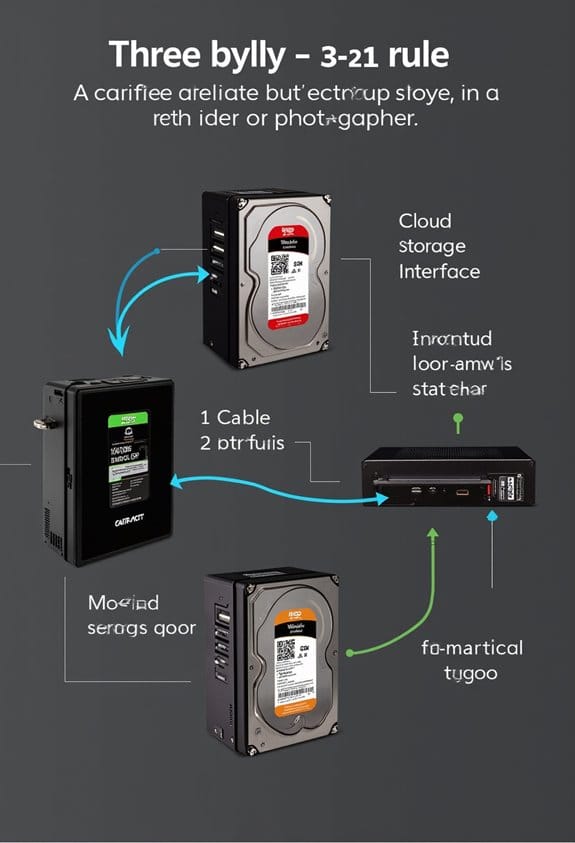
Hey there! Let’s talk about something super important for photographers—backup strategies. If we lose client images, it can really cause a mess, right? That’s why we need to take our professional work seriously. A great way to protect our data is the 3-2-1 backup rule. Simply put, it means keeping three copies of our photos, using two different types of storage, and making sure one copy is off-site.
For example, you could store one copy on an external hard drive, another on your computer, and then use a cloud service like Backblaze for that all-important off-site backup. This way, if something happens to your local storage, you still have your images safe and sound. Plus, backing up images right after you shoot can help eliminate the risk of losing files. Schedule regular backups too—maybe every week—to stay on top of it.
Oh, and when you do back up, make sure to categorize and label everything. This makes it way easier to find specific images later on, especially if you’re dealing with hundreds (or thousands!) of photos. In the end, a solid backup plan not only keeps your work safe but also makes your life easier. Now that we’ve covered that, let’s jump into how to organize those photos once we’ve got them backed up! Regular maintenance of your camera equipment, including using effective sensor cleaning kits, can significantly improve image quality and protect your investment.
The Essentials of the 3-2-1 Backup Rule
Hey! So, let’s chat about one really important principle in keeping our data safe: the 3-2-1 backup rule. This is a handy guideline that can give you peace of mind when it comes to protecting your important files. Essentially, the rule tells you to keep three copies of your data—one original and two backups.
Now, you might wonder why that’s necessary. Well, having two backups on at least two different media types like an external hard drive and a cloud service adds an extra layer of security. For example, if your computer crashes, you can still access your files from your external drive or the cloud. And it’s a good idea to have one of those backups stored somewhere off-site, like at a relative’s house or in a different location. This way, if something unfortunate happens locally—like a fire, flood, or theft—you won’t lose everything. Incorporating proper maintenance tools and techniques, such as those found in a comprehensive cleaning kit, can also help protect and extend the life of your physical photo storage devices.
Steps to Implement the 3-2-1 Backup Strategy
Hey! So, if you’re thinking about the 3-2-1 backup strategy for your photos, you’ve got a smart plan in mind. The first thing you’ll want to do is gather all your photos in one central spot. Think of creating a dedicated folder on your computer or using a digital hub like Google Drive. This way, everything is organized and easy to find.
Once you’ve got all that sorted, it’s time to back up those photos. A reliable cloud storage service, like iCloud or Google Photos, is a great choice. It acts like a safety net, protecting your memories from physical disasters—like if your laptop suddenly decides to retire. Then, for that extra layer of safety, you should make a third copy. You could use an external hard drive or even another cloud service to ensure those photos are safe and sound.
Oh, and a quick tip: Label all your storage devices with “BACKUP” and include the last updated date. This little step makes it super easy to check which ones are current. For even more added protection, consider storing one of those external hard drives offsite, maybe at a friend’s place or in a safety deposit box. It’s all about keeping those precious memories safe! So, how about we explore some more ways to ensure your backups are solid? Using optical image stabilization technology can help keep your photos clear, which makes your backups even more worthwhile.
Personalizing Your Backup Strategy
So, let’s talk about how we can personalize our photo backup strategy to really fit your needs. It’s all about understanding your unique photography workflow. For example, if you’re capturing events like weddings or taking studio portraits, your approach might be different than someone who focuses on travel photography. The goal is to ensure you have enough backups—remember the 3-2-1 rule? That’s three copies of your photos, two stored locally (like on an external hard drive), and one off-site (like in the cloud) for added security.
To make things easier on you, consider using both cloud storage and external drives. Cloud services are great because they allow you to access your images from anywhere, while external drives are fantastic for keeping a secure backup. Imagine having a drive dedicated solely to a specific photoshoot, so you can easily find everything without sifting through a mess of files. Regularly updating your backups and setting up automation can also save you time and reduce the chances of forgetting.
Creating a neat organization system is super important too—labeling your folders clearly can make a huge difference. It saves you from rummaging around for that perfect shot later! Plus, connecting with fellow photographers can lead to discovering new tips and tricks for your backup routine. So, as you think about these strategies, remember that a personalized backup plan not only protects your work but also enhances your overall photography experience—peace of mind goes a long way! Consider also the value of durable accessories like external hard drive cases or carriers to protect your backup devices during travel.
Common Backup Mistakes to Avoid
Hey there! If you’re into photography, whether just as a hobby or professionally, it’s super important to talk about backup mistakes. Many photographers tend to underestimate how crucial it is to have a solid backup plan for their work. Just think about it: if you rely solely on one external hard drive and it crashes, you could lose everything. That’s why following the 3-2-1 rule is a smart move. It means you should keep at least three copies of your photos in two different formats and have one of those copies stored in the cloud—this way, you guard against losing everything in one fell swoop.
Another common pitfall is formatting your memory cards before you’re absolutely sure that all your files are backed up and verified. It’s so easy to accidentally delete something important in the process! Plus, don’t forget about those aging storage devices; if you haven’t checked them in a while, they might fail when you least expect it. Even if you set up automated backups—which can be a real time-saver—it’s still essential to check in occasionally to confirm that everything’s doing what it should. After all, peace of mind is key when it comes to safeguarding your creative work! Additionally, when backing up images from Sony mirrorless cameras, using the RAW format can preserve more detailed image data for future editing and archiving.
Best Practices for Maintaining Backup Systems
Hey there! So, you know how important it is for photographers to have a solid backup system, right? It’s like having a safety net for all that hard work you’ve put into capturing those perfect moments. Having backups on both external drives and in the cloud is key to protecting your photos from unexpected stuff like hardware failures or even natural disasters.
Think of it this way: it’s a good idea to keep two copies of all your important data – one close at hand on an external hard drive and another safely tucked away in the cloud. This way, if one fails, you’ve still got the other. Plus, setting up automated backups can save you a lot of headaches down the road. Imagine your photos being backed up on their own every night while you’re sleeping, so you don’t have to worry about it!
Also, don’t forget to regularly check that your backups are running smoothly and accessible. It’s like checking in on a friend – you want to make sure they’re doing okay. If something does go wrong, you’ll be glad you took the time to verify everything. And let’s not ignore our hardware – plan for routine checks on your hard drives. They’re like cars that need maintenance; if you don’t check in on them, they might let you down when you need them the most.
With these simple practices in place, you can keep your precious photos safe and sound. Cameras like the Canon EOS R100 with built-in image stabilization help reduce the chance of blurry shots, ensuring your backups capture high-quality images. And speaking of keeping things organized, let’s talk about how to sort and label your files for even easier access!
Frequently Asked Questions
How Often Should I Update My Backups?
Let’s think of our backups like clockwork; we should update them regularly—aim for full backups monthly, with weekly incremental ones. Utilizing automation tools can help simplify the backup schedule while ensuring data preservation and recovery planning.
Can I Use Online Backup Services for Offsite Storage?
Yes, we can use online backup services for offsite storage. By considering cloud storage options, security protocols, and user reviews, we’ll guarantee data retrieval is efficient and safe, balancing cost analysis and integration options with storage limits.
What Types of External Drives Are Best for Backups?
For backups, we prefer SSDs for speed and longevity, especially Thunderbolt drives with USB C benefits. While HDDs offer more capacity at lower prices, RAID configurations can enhance data safety and improve performance.
Should I Encrypt My Backup Data?
More than 60% of data breaches come from unencrypted backups. So, we should definitely encrypt our backup data to protect against malware threats and privacy concerns, ensuring compliance and secure data recovery for long-term storage.
How Do I Test My Backups for Accessibility?
To test our backups for accessibility, we should perform regular accessibility audits, verify file integrity, check restore procedures, and guarantee user permissions are set correctly across various backup formats. Data recovery’s only effective if we can access our backups.


