As an Amazon Associate, we earn from qualifying purchases. Some links on this site are affiliate links at no extra cost to you. Our recommendations are based on thorough research and editorial judgment.

Distortion Vs Perspective: Why Wide Lenses Can Make Faces Look Odd

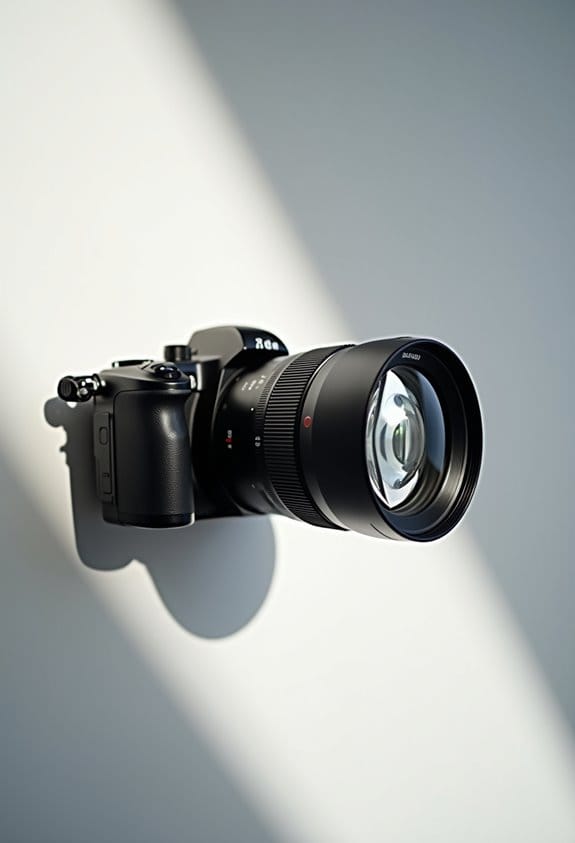
Wide-angle lenses create distortion by exaggerating facial features, especially when we’re too close to the camera. This effect, known as proximity distortion, can make noses look bigger or faces seem wider than they really are. The lens compression found in longer focal lengths provides a more flattering portrayal. Understanding these impacts helps us capture better photographs and maintain realistic facial proportions. By exploring this further, we can uncover practical tips for achieving more accurate images.
Key Takeaways
- Wide-angle lenses amplify facial distortion, making features like noses appear larger and altering proportions when subjects are close to the camera.
- Proximity effects occur when the camera is too close, leading to an exaggerated representation of nearest facial features.
- The brain’s comparison to mirror reflections creates discrepancies, emphasizing how wide lenses distort self-image and confidence.
- Using longer focal lengths helps compress space, producing more flattering and proportionate portraits without distortion.
- Good lighting alongside proper lens choice can significantly improve photo quality and minimize odd appearances in selfies.
What Is Perspective Distortion?
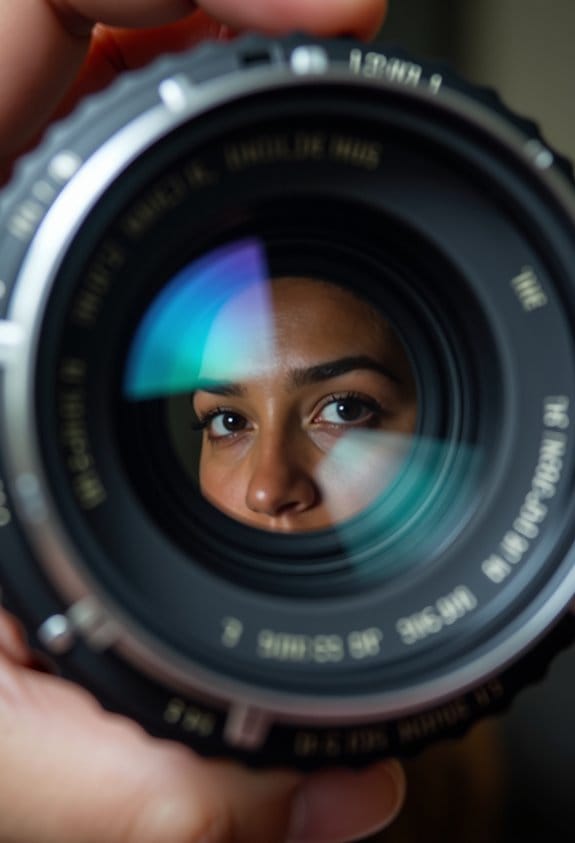
Have you ever noticed how different your selfies look depending on how far you hold your camera? That’s perspective distortion at play! It’s all about the distance between your camera and the subject and how that can dramatically change their appearance in photos.
For instance, when you snap a selfie at arm’s length, your nose might look bigger while your eyes appear smaller. This happens because the features that are closer to the camera get exaggerated compared to those that are further away. If you take a picture with a wide-angle lens, this distortion can really stand out, making objects closer look even more pronounced.
To get more balanced and flattering images, think about your camera’s focal length and how far away you are from your subject. Next time you’re taking a group photo, try stepping back a bit. You’ll notice that everyone looks more in proportion, and the overall shot feels more natural. Understanding perspective distortion can really elevate how you capture moments, so keep playing around with it! Using a 3-axis stabilization gimbal can also help maintain clarity and reduce shake when shooting at different distances.
Proximity Effect and Field of View
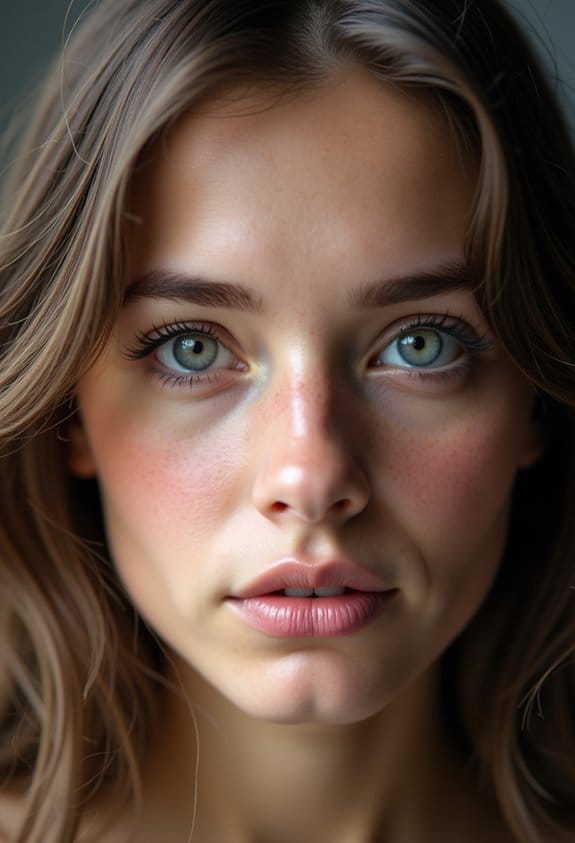
Hey there! Let’s chat about the proximity effect and field of view – they’re super important when it comes to snapping beautiful, balanced photos. You know when you use a wide-angle lens? It can make things a bit wonky, especially with faces. If you’re too close to the camera, your nose can look way bigger than it actually is, which isn’t exactly what most people want for their selfies!
With wide-angle lenses, you get to capture a ton of the scene around you, which is awesome, but that also means you risk making those pesky distortions even worse. If you want to avoid that big-nose look when taking selfies, try holding your camera a bit further away from your face. Or, you can use a selfie stick; that extra distance makes a world of difference in how your features come across in the picture.
Thinking about these little details can really amp up your photography game. And who doesn’t want a picture that looks just right? Let’s move on to some tips for lighting next!
For capturing better detail in low light, remember that using cameras with low-light performance can make a significant difference.
The Role of Lens Compression

Hey there! Let’s chat about lens compression and how it affects the way we see objects in our photos, especially when we’re shooting portraits. You might not realize it, but the focal length of your lens can really change how facial features look. For instance, if you use a wide-angle lens, it can distort your subject’s features—a nose might look much larger just because it’s closer to the camera.
On the flip side, using a telephoto lens, like an 85mm or 135mm, helps compress the space in your shot. This means that your subject and background will appear closer together, which can create more flattering results in portraits. So if you want to avoid those funny distortions while giving your subjects that dreamy, well-composed look, stick with those common portrait lengths.
When traveling, consider a mirrorless camera with lens versatility options to easily switch between wide and telephoto lenses for better control over your portraits.
Practical Examples and Tips
Hey there! If you want to get the best results in photography, especially when using wide-angle lenses, it’s important to think about how different techniques can help minimize distortion. For instance, when you hold your camera or smartphone too close for a selfie, it can make facial features look a bit funny; like, your nose might seem larger than it is. To counteract this, one great tip is to use a selfie stick or simply stretch your arms out farther while snapping the picture. Keeping a distance of about 3 to 5 feet usually gives a much more natural look.
Another thing you can try is experimenting with longer focal length lenses. This can show you how different angles affect the way your features come across in photos. For example, if you switch from a wide-angle lens to a standard or telephoto lens, you’ll notice a difference in how your face looks—much less distortion! With these tips, you’ll be on your way to taking better photos and feeling more confident behind the camera. Now, let’s chat about how lighting plays a role in making your images pop!
The Science Behind the Scenes
Have you ever noticed how wide-angle lenses create some pretty unique visual effects in photos? When we snap pictures with these lenses, especially up close, we often see something called lens distortion making facial features look a little different. For instance, if you take a portrait from just a couple of feet away, the nose might jump out and appear larger than the ears, which can be a bit tricky when it comes to flattering images.
This happens because of something called the proximity effect, where the distance between the camera and the subject changes how we perceive size. So, those facial features closer to the lens really do look bigger compared to those that are further away. Plus, situations like barrel distortion can curve the lines at the edges of the image, which complicates how faces come across. If you’re aiming for a more natural look, switching to longer focal lengths, like 85mm to 135mm, can really help. This range tends to minimize distortion and offers a clearer representation of facial features, giving your subjects a much more pleasing look. Choosing the correct focal length range is essential for achieving the desired perspective and reducing distortion effects.
The Psychological Impact of Facial Distortion and Compression
Have you ever taken a selfie with a wide-angle lens and noticed how different your face looks? Those facial distortions can actually have a surprising psychological impact on how we see ourselves. When you snap a picture and see exaggerated features—like a fuller nose or larger cheeks—it’s easy to feel a hit to your confidence.
This happens because our brains are wired to compare what we see in photos to our reflections in the mirror, which look very different. For instance, if you’re used to seeing your reflection with a more balanced perspective, a wide-angle photo could feel jarring. It might leave you questioning your appearance and feeling confused about your identity.
Understanding how perspective and distortion play a role can help you make better choices while snapping pictures. For example, try using a standard lens for portraits; it more closely mimics how we see ourselves in real life. This simple adjustment can help reduce that uncomfortable feeling and promote a healthier self-image moving forward. Additionally, maintaining your camera gear with proper sensor cleaning tools ensures your images remain sharp and clear, helping to accurately capture true-to-life portraits.
Understanding Facial Proportions
Have you ever taken a selfie and thought, “Wow, my face looks totally different than in the mirror?” This can happen because of the way wide-angle lenses can distort our features. When you’re taking a selfie with one of these lenses, the part of your face that’s closest to the camera—like your nose—can end up looking much larger than it really is, messing with the natural proportions of your face.
Facial proportions usually rely on some pretty specific ratios to look balanced and pleasing. For instance, have you noticed how models often look more striking in photos? That’s because professional photographers typically use lenses with longer focal lengths, usually between 85mm and 135mm. These lenses minimize distortion and provide a more flattering representation of the face.
Next time you’re snapping a photo, try stepping back a bit or using a different lens if you have that option. By being mindful of how distance affects the way we see ourselves in pictures and avoiding these common pitfalls, you’ll likely find that your photos start to look more like the face you see in the mirror!
Techniques to Minimize Distortion
Hey there! If you’re looking to snap some flattering selfies and minimize distortion, I’ve got a few tips that can seriously help. First off, try holding your camera a bit farther away than just arm’s length. This simple trick keeps features like your nose or forehead from looking too big in the frame. Picture yourself at a park—if you’re taking a selfie with your friends, extend that camera out and give it a little extra distance.
Another great option is to use a selfie stick or a tripod. This lets you get that perfect angle without having to stretch your arm out too far. And speaking of angles, using a longer focal length lens, like an 85mm, can make a surprisingly big difference. It’s more forgiving and keeps your features more true-to-life compared to those wide-angle lenses that can warp your look.
Don’t overlook lighting, either! Good lighting can make a world of difference in your photos. For instance, try taking selfies during the golden hour—just after sunrise or before sunset—for that soft, flattering glow. And if you end up with a selfie that still needs a little love, you can always turn to software like Lightroom to fix any remaining distortion. So, go ahead and capture those sweet moments—you’ve got all the tools you need! Keep in mind that choosing the right focal length can greatly influence your portrait outcomes.
Frequently Asked Questions
Why Does My Face Look Deformed on the Camera?
Our faces might look deformed in photos due to lens curvature and camera angles, causing distortion effects that alter facial proportions. Even with photo editing, achieving flattering results in portrait photography can feel like an uphill battle.
Does a Wide Angle Lens Distort a Picture?
Yes, a wide-angle lens can distort a picture through its unique lens characteristics. The short focal length alters image composition, creating perspective effects that lead to various distortion types, affecting our visual perception of subjects.
What Type of Lens Tends to Distort Facial Features?
In portrait photography, wide-angle lenses often create lens distortion that exaggerates facial proportions. By choosing a longer focal length and mindful camera angle, we can present more flattering images while capturing genuine moments together.
What Are the Disadvantages of Using Wide-Angle Lenses?
Using wide-angle lenses presents drawbacks like distorted facial proportions and spatial compression, especially in close-ups. We should carefully consider our lens choice to avoid unwanted perspective distortion that can negatively impact our images.


