As an Amazon Associate, we earn from qualifying purchases. Some links on this site are affiliate links at no extra cost to you. Our recommendations are based on thorough research and editorial judgment.


APS-C Vs Full Frame: How Sensor Size Changes Your Photos (With Examples)

When we compare APS-C and full-frame sensors, we notice several key differences that affect our photos. APS-C sensors have a crop factor, which makes lenses appear longer, benefiting wildlife or action shots. Full-frame sensors create a shallower depth of field, enhancing background blur, perfect for portraits. Additionally, full-frame captures more light, improving low-light performance. As we explore these differences further, we can understand how each sensor type serves specific photography needs and situations.
Key Takeaways
- APS-C sensors provide a crop factor that effectively extends lens reach, ideal for wildlife and action photography.
- Full-frame cameras achieve a shallower depth of field, enhancing background blur for portraits compared to APS-C sensors.
- Smaller APS-C cameras and lenses are more portable and budget-friendly, catering to beginner photographers.
- Full-frame sensors capture more light, resulting in cleaner low-light images and wider dynamic range over APS-C sensors.
- Each sensor type excels in specific scenarios: APS-C for tight compositions and fast action, full-frame for landscapes and dreamy backgrounds.
Understanding Sensor Size: APS-C Vs Full Frame

Hey there! If you’re stepping into the world of photography, one of the first things to understand is sensor size, especially when you’re weighing APS-C sensors against full-frame sensors. So, here’s the scoop: full-frame sensors measure 36mm x 24mm, while APS-C sensors are smaller—about 22.2mm x 14.8mm for Canon models. This size difference gives APS-C sensors a crop factor of roughly 1.5x to 1.6x, which basically means your lenses will give you a longer reach, which is fantastic for capturing wildlife or action shots.
Now, if you’re into portraits, full-frame sensors are pretty appealing. Why? They create that beautiful, creamy background blur, known as bokeh, which helps your subject really pop. On the flip side, if landscapes are more your jam, APS-C cameras generally provide a deeper depth of field, allowing more of your scene to be in focus at the same aperture. And get this: the latest APS-C models have been making strides in low-light performance, which means you can shoot in dim conditions without sacrificing image quality, narrowing the gap with full-frame options. When exploring astrophotography, sensor size and low-light capabilities become even more crucial for capturing detailed celestial objects in the night sky.
The Impact of Crop Factor on Focal Length
Hey there! Let’s chat about how crop factor really shakes up our lens choices in photography. You see, crop factor measures how much smaller the sensor in your camera is compared to a full-frame sensor. This difference significantly alters the effective focal length of your lenses. For instance, if you’re using a Canon camera with an APS-C sensor, its crop factor of 1.6x means that a 50mm lens will actually give you a field of view similar to an 80mm lens on a full-frame camera. Neat, right?
Now, if you’re using a Nikon APS-C camera, the crop factor is slightly lower at 1.5x, which makes a 200mm lens feel more like a 300mm! This can be really beneficial when you’re trying to capture faraway subjects, like during a wildlife shoot. The smaller sensor not only brings distant subjects closer but also gives you a tighter angle of view, which can help you frame your shots more intentionally. Understanding how different focal length ranges affect your image composition can further enhance your photography results.
Recommended Products

Bundle Includes: Sigma 150-600mm f/5-6.3 DG OS HSM Contemporary Lens for Canon EF, Backpack, Memory Card, Card Reader, Filter Kit

Items included: Sigma 150-600mm f/5-6.3 DG OS HSM Contemporary Lens for Canon EF, Tripod Collar, Lens Case, Lens Hood, Protective Cover, Shoulder Strap, Lens Cap, Rear Lens Cap, 3-Piece Filter Kit, Full Cleaning Kit, Lens Cap Keeper

Items included: Sigma 150-600mm f/5-6.3 DG OS HSM Contemporary Lens for Canon EF, Tripod Collar, Lens Case, Lens Hood, Protective Cover, Shoulder Strap, Lens Cap, Rear Lens Cap, 3-Piece Filter Kit, Full Cleaning Kit, Lens Cap Keeper, Backpack, 64 GB Memory Card, Card Reader, Card Wallet
Depth of Field: How Sensor Size Affects Background Blur

Hey there! So, let’s talk about depth of field, which is super important for photographers, especially when it comes to creating that beautiful background blur, or bokeh, in our images. If you’re using a full-frame camera, you’ll generally get a shallower depth of field compared to an APS-C sensor. This difference means that full-frame gear can really help your subject stand out against a soft, dreamy background, which is perfect for portraits.
Here’s a quick example: imagine you’re shooting with an f/2.8 lens. On a full-frame camera, that f-stop will give you a wonderful blur that makes your subject pop. But if you’re using an APS-C camera with a 50mm lens set at f/4, you might notice that the background blur isn’t quite as pronounced as it would be if you were using an 80mm lens at f/4 on a full-frame camera. It’s fascinating how sensor size shifts the depth of field!
Understanding how image sensors can change the look of your photos helps you make better choices in your photography. So, next time you grab your camera, think about how you can use this knowledge to enhance your images! With that in mind, let’s explore how aperture settings also play into this whole depth of field conversation. Lenses with a bright f/2.8 aperture can notably enhance clarity and subject isolation, emphasizing the effects of depth of field even further.
Image Quality and Low Light Performance
When it comes to image quality and low light performance, these are super important if you’re into photography, especially when you’re snapping pics in darker settings. Full-frame sensors are like little light magnets compared to APS-C sensors—they just soak up more light. So when you crank up the ISO to 3200 or more, full-frame cameras usually give you cleaner images with way less noise. For instance, you’ll notice that your night shots are smoother and look better overall.
Not only that, but full-frame cameras also have a wider dynamic range. This means you get smoother transitions between highlights and shadows, which is great for capturing detail in tricky lighting. Think about those moments at sunset where bright areas can wash out—full-frame cameras handle those scenes beautifully. Plus, the larger pixels allow for nicer depth of field control, making it easier to blur the background and bring your subject to life.
Sure, the latest APS-C models have stepped up their game a bit, but they can still struggle with noise at higher ISO settings. So if low light performance is high on your list, full-frame might be the way to go. Moving on from image quality, let’s talk about lens options and how they can shape your photography experience. Additionally, camera features like Dual Pixel CMOS AF improve autofocus speed and accuracy, helping you capture sharp images even in challenging lighting conditions.
Recommended Products

World’s lightest1 600mm super-telephoto full frame wide-aperture F4 lens

Sony USA Authorized. Bundle Includes: Sony FX6 Digital Cinema Camera Kit with 24-105mm Lens + Sony FE 70-200mm f/2.8 GM OSS II Lens, Sony 160GB CFexpress Type A TOUGH Memory Card, Sony BP-U35 Battery, 3 Piece Filter Kit, Graduated Color Filter Kit, Tulip Lens Hood, Large Bag, Memory Card Wallet, Cleaning Kit, HDMI Cable, Lens Cap Keeper

Telephoto zoom lens that builds on the legacy of the popular EF300mm f/2.8 lens.
Camera Size and Portability Considerations
When you’re picking a camera, size and portability are definitely things to think about, especially if you love taking photos on the move. APS-C cameras stand out in this area because they’re usually lighter and more compact, making them a breeze to carry around. For example, the Canon EOS R50 weighs just about 1.3 kg, while the full-frame Canon EOS R6 Mark II is nearly double that at around 3.1 kg. That’s a pretty big difference when you’re out shooting for hours!
Another cool perk of APS-C cameras is their smaller lenses, which keep the overall weight down. This can be a real lifesaver during events or street photography when you want to stay mobile without feeling weighed down. Plus, many APS-C options won’t break the bank, which means you can shoot comfortably without getting too tired. To further enhance portability and shooting stability, it’s wise to choose from top lightweight tripod options designed specifically for travel photographers.
Benefits of APS-C Cameras for Specific Photography Genres
Hey there! You know, APS-C cameras really shine in different photography genres, and I think you’d find them pretty interesting. For instance, if you’re into wildlife photography, the 1.6x crop factor is a game-changer. It effectively boosts your focal length, so you can get those stunning close-ups of animals from a distance without needing to shell out for super expensive long lenses.
Now, if landscape photography is more your thing, APS-C sensors have this fantastic ability to give you a deeper depth of field. What that means is you can have more of your scene in sharp focus, even when using wider apertures. So, when you’re out there capturing a mountain range at sunset, everything from the foreground to the horizon can look crystal clear.
Street photography benefits too! The compact and lightweight nature of APS-C cameras makes them super easy to carry around. You’ll find it less cumbersome to snap candid shots while blending into a bustling city scene. Plus, if you’re working with a budget, you’ll love that APS-C lenses usually come at a lower price point, which is great if you want to explore portrait or product photography without breaking the bank.
Speaking of versatility, the enhanced reach of APS-C cameras also means you can use shorter focal lengths effectively, which is perfect for wide-angle astrophotography. You can capture sprawling night skies with beautiful clarity without needing the most advanced gear. So, whether you’re a budding photographer or someone who’s been in the game for a while, APS-C cameras definitely have something to offer. What’s next on your photography journey?
To get the best colors in your shots, especially in challenging lighting, consider using custom white balance techniques for accurate color rendering and reduced post-processing.
Recommended Products

Offers OS (Optical Stabilization

SONY USA Authorized Model. Bundle Items Included: Sony FE 200-600mm f/5.6-6.3 G OSS Lens, 64GB Ultra SDXC Memory Card, Pro Sling Backpack, Flexible Tripod, Memory Card Reader, Memory Card Wallet, Hand Strap, Cleaning Kit, Lens Cap Keeper

High image quality and bright f/2.8 aperture telephoto zoom RF L lens.
Advantages of Full Frame Cameras in Professional Use
Hey there! Let’s talk about full-frame cameras and why they’re so popular among professionals. These larger sensors, which measure 36mm x 24mm, are great at capturing more light. This means they really shine in low-light situations, producing cleaner images with less noise, even at higher ISO settings. So, if you’re shooting a wedding reception in dim lighting, a full-frame camera will help you get those gorgeous shots without a grainy look.
Another cool thing about full-frame cameras is their ability to give you a shallower depth of field. This creates that beautiful background blur that you often see in professional portrait photography. Imagine capturing a stunning headshot where your subject stands out against a softly blurred background—that’s what full-frame can do for you. Plus, they usually deliver a wider dynamic range, which helps in maintaining detail in both highlights and shadows, enhancing the overall quality of your images.
If you’re a landscape photographer, full-frame cameras are fantastic because they capture a wider field of view. This means you won’t miss out on those breathtaking vistas. Pair it with a high-quality full-frame lens, and you’re looking at sharp, detailed images that really pop. Ultimately, if you’re aiming for excellence in your photography, going full-frame could be the way to elevate your work to the next level. Now, let’s explore how different lenses can further enhance your photographic experience!
Additionally, having access to vast lens compatibility ensures you can select the perfect lens to match your photographic style and subject matter.
Recommended Products

FULL FRAME COMPATIBILITY: The NiSi Athena Prime Master Kit is purpose-built for ARRI PL camera mount systems, offering a generous 46mm image circle that ensures sharp, consistent results across the entire frame. Each camera lens delivers outstanding contrast, minimal distortion, and rich color accuracy, ideal for use with a full-frame sensor. Whether paired with a professional camera or high-end cinema camera, this full-frame camera lens kit is made for serious, precision-driven filmmakers.

Advanced 60MP Full-Frame Sensor: The Leica Q3 43 Compact Powerful Digital Camera 60MP BSI CMOS sensor delivers impeccable image clarity and dynamic range, even in challenging lighting. Its ability to shoot in full resolution or use Triple Resolution Technology (60MP, 36MP, or 18MP) camera bagmakes it ideal for professionals working across landscapes, architecture, and portrait photography who demand exceptional detail and versatility.

Items Included: 1 x Sony FX6 Full-Frame Cinema Camera (Body Only), 1 x Large Bag, 1 x Memory Card Wallet, 1 x Cleaning Kit
Choosing the Right Lens for Your Sensor Type
Choosing the right lens for your camera’s sensor type is super important if you want to get the best results in your photography. Let’s break it down! If you’re using an APS-C sensor, keep in mind that it has a crop factor. This means that a 50mm lens will feel like an 80mm lens on a full-frame camera, which can really change your composition. APS-C lenses are often smaller and more affordable, making them perfect for beginners or anyone looking for something lightweight to take on the go. For instance, if you’re into wildlife photography, a telephoto lens can give you that extra reach to capture distant subjects beautifully.
Now, if you have a full-frame camera, you’ll want to focus on lenses with wider apertures. These lenses can create that lovely background blur we all love in portrait photography. Don’t forget, while you can use full-frame lenses on an APS-C camera, they’ll give you a narrower field of view. So, if you’re planning to shoot landscapes or cityscapes, you might want to stick with lenses specifically designed for APS-C sensors. Understanding the ins and outs of your gear is key, and once you grasp these details, it opens up a world of creative possibilities! Also, considering the aperture range importance when selecting lenses helps you control exposure and depth of field to enhance your images effectively.
Recommended Products

L Mount Lens/Full-Frame Format Aperture Range: f/2.8 to f/22
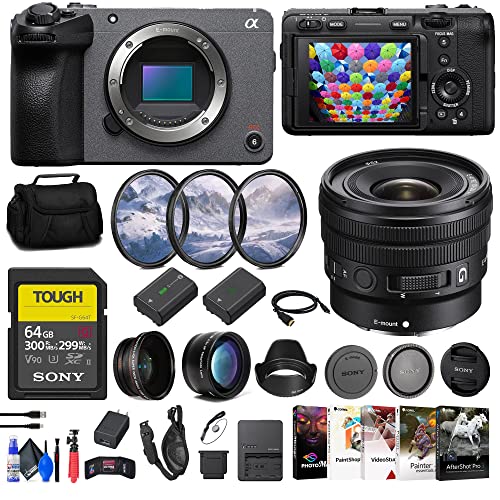
Items Include: 1 x Sony FX30 Digital Cinema Camera, 1 x Sony E 10-20mm f/4 PZ G Lens , 1 x Sony 64GB SF-G Tough Series UHS-II SDXC Memory Card, 1 x 3 Piece Filter Kit, 1 x Wide Angle Lens, 1 x Telephoto Lens, 1 x Tulip Lens Hood, 1 x Soft Bag, 1 x NP-FZ100 Battery, 1 x NP-FZ100 charger, 1 x Photo Software With PhotoMirage, AfterShot, Painter Essentials, PaintShop Pro, and Video Studio, 1 x 12 inch Flexible Tripod, 1 x Hand Strap, 1 x Memory Card Wallet, 1 x Cleaning Kit and more...
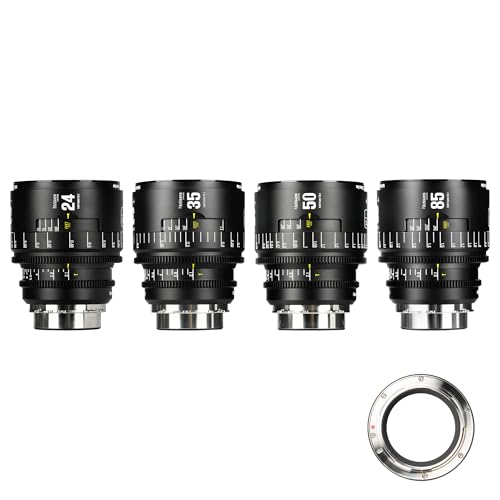
Full-Frame Coverage: The 7artisans INFINTE Series Cine Lens is engineered for professional cinema production, supporting a maximum image circle of 43.5mm for full-frame sensor coverage. Highly compatible with major cinema cameras, it ensures seamless switching across platforms. Equipped with standard focus gears, it integrates smoothly into various production setups—ideal for professional cinematographers and film crews.
Real-world Examples: Comparing APS-C and Full Frame Images
When we chat about photography, one of the hot topics is the difference between APS-C and full-frame cameras. You might notice that images from these two types can really change how we approach our shots. For example, if you slap a 50mm lens on an APS-C camera, it’s kind of like using an 80mm lens on a full-frame. This makes APS-C fantastic for capturing wildlife or fast-moving sports since you can zoom in a bit more without changing your lens!
Now, if you enjoy portrait photography, you’ll love the full-frame sensor because it lets you create that dreamy, blurry background or bokeh that makes your subject pop. Plus, when shooting in low-light situations—think a cozy café or evening event—full-frame cameras shine. They tend to handle noise better, so your images stay sharp and clear even at higher ISO settings.
On the other hand, if you’re into street photography, APS-C sensors can help you get those tight, impactful compositions. But when it comes to grand landscapes or stunning architecture shots, full-frame gives you that wide field of view to really capture the scene. It’s all about choosing the right tool for your vision! So, whether you’re focusing on detailed portraits or breathtaking vistas, understanding these differences can make a world of difference in your photography journey. Additionally, many APS-C mirrorless cameras offer Dual Pixel Autofocus systems that ensure fast and reliable focusing, helping you capture sharp images in dynamic situations.
Frequently Asked Questions
Can I Use Full-Frame Lenses on APS-C Cameras?
Yes, we can use full-frame lenses on APS-C cameras, but we must consider crop factor effects on focal length, potential image vignette, lens distortion, weight, cost implications, and how aperture affects our images.
How Do APS-C and Full-Frame Sensors Affect Video Quality?
When we think of sensors, it’s like picking a trusty steed. Full-frame sensors usually offer better video resolution, low light performance, and dynamic range—enhancing color accuracy and depth perception while minimizing motion blur in our footage.
What Is the Lifespan Difference Between APS-C and Full-Frame Cameras?
When we consider lifespan comparison, full-frame cameras often offer better sensor durability and build quality. We should also factor in usage frequency, environmental resistance, technology advancements, and brand differences in user reviews and maintenance costs.
Are There Significant Price Differences in Lenses for Both Sensor Types?
Yes, we’ll find significant price variations in lenses for both sensor types. Lenses often vary in brand differences, crop factor impacts, and weight differences, creating budget options alongside high-end choices and affecting lens compatibility and features like image stabilization.
Does Sensor Size Affect Autofocus Performance?
Sensor size does affect autofocus performance; we’ve noticed that larger sensors often enhance focus accuracy and low light performance. This can improve subject tracking, depth perception, and user experience during continuous shooting and zone focusing.