As an Amazon Associate, we earn from qualifying purchases. Some links on this site are affiliate links at no extra cost to you. Our recommendations are based on thorough research and editorial judgment.


Mirrorless Camera Features That Matter (and the Ones That Don’t)

When we choose a mirrorless camera, certain features matter more than others. Live exposure preview is essential, as it helps us see adjustments in real-time. Lightweight design makes carrying easier, especially during longer shoots. Black and white live preview enhances composition skills. While useful, customization options can feel overwhelming. Battery life varies, so we should consider our needs. Understanding lens compatibility helps us use the right set-up. Let’s analyze unnecessary features to guide our choices effectively.
Key Takeaways
- Live Exposure Preview enhances shooting accuracy by providing real-time adjustments, making it essential for managing highlights and exposure settings effectively.
- Silent Shooting Modes are beneficial for discreet photography but may compromise image quality; their necessity depends on the shooting environment.
- Ergonomics and Usability matter greatly for comfort during prolonged shoots, with balanced designs and custom options improving the overall user experience.
- Battery Life varies significantly; beginners should consider models with sufficient longevity to avoid frequent recharging interruptions during shoots.
- Avoid Unnecessary Features like complex dials and high megapixel counts that can overwhelm beginners without significantly enhancing the photography experience.
Live Exposure Preview: Understanding Its Importance

Have you ever been curious about how photographers manage to take breathtaking shots in all kinds of lighting? It all comes down to something called live exposure preview in mirrorless cameras. This handy feature, which you can see through the electronic viewfinder (EVF), shows you real-time adjustments to your exposure settings. So, if you tweak the shutter speed or ISO, you get to see the impact on the image quality right away!
For instance, if you’re in a bright setting and worried about your highlights getting too bright, the EVF has tools like Zebra stripes that show where you might be losing those details. It’s super helpful in making sure your photos come out just right. Plus, if you’re focusing manually, the live feed from the sensor makes it much easier to get that perfect sharpness. You can use focus peaking, which highlights what’s in focus, making your adjustments more precise. Using external DSLR lights can complement this process by providing consistent brightness and color temperature, which enhances your control over exposure and color accuracy.
The Benefits of Lightweight Design in Mirrorless Cameras

You know, one of the coolest things about mirrorless cameras is their lightweight design. Unlike those traditional DSLRs that feel like you’re lugging around a brick, mirrorless cameras are compact and super easy to carry. This is really handy when you’re out for a long day of shooting or traveling. Just imagine not having to worry about the strain on your back after a few hours!
Plus, a lot of mirrorless systems, especially those in the Micro Four Thirds category, come with compact lenses that make them even more portable. This means you can easily pack more gear into a limited space, which is a big win, especially for street photography. Being able to blend into your surroundings without a huge camera bag makes it so much easier to capture those spontaneous moments of life.
With such a reduced weight, you can often fit all your essential gear into a single backpack. It really promotes convenience and mobility—perfect for a day out exploring your favorite spots or even just for a casual photo walk around town. Speaking of that, let’s talk about how these cameras perform in different environments and lighting conditions!
Many models offer five-axis dual image stabilization, which further enhances the ability to shoot clear photos even in challenging situations.
Black and White Live Preview: Enhancing Monochrome Photography
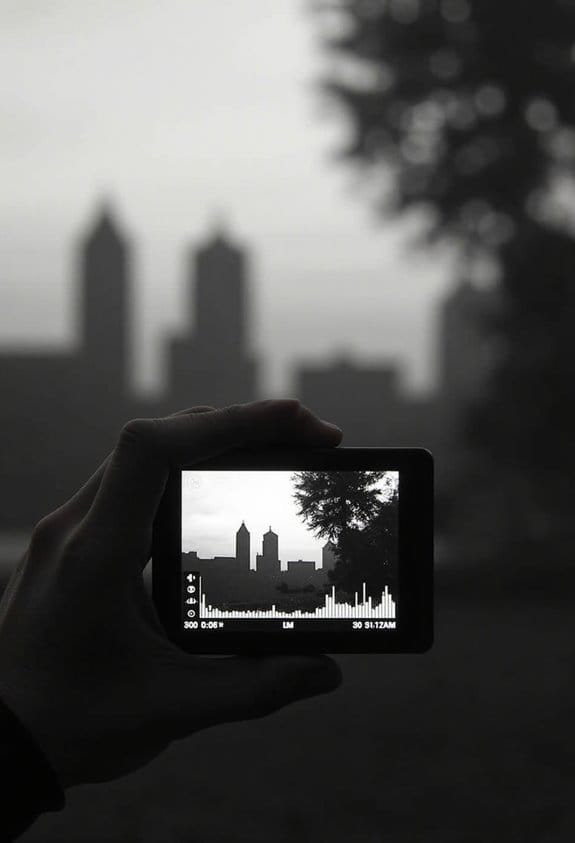
Hey there! If you’re into photography, you might find that capturing stunning black and white images is all about understanding how light and shadow play together. One of the coolest features in our mirrorless cameras is the black and white live preview. This lets you see your composition in monochrome right in the electronic viewfinder, which can really sharpen your sense of how tones relate to one another.
For example, when you adjust your settings, you can instantly see how colors are transformed into different shades of gray. This helps you nail your exposure and composition on the spot. So, if you’re shooting a landscape, you can immediately check how the clouds’ shadows harmonize with the highlights of the mountains.
Unlike with traditional DSLRs, where you’d have to wait until after the shot to see the effects, mirrorless cameras give you that real-time feedback. This means you can tweak things like contrast or brightness and see the results immediately. It’s a fantastic way to enhance your shooting skills, whether you’re focused on black and white or color photography.
Speaking of color, understanding how to use that black and white preview can also benefit your color work. It teaches you about contrast and composition that apply no matter what kind of photography you’re doing. Regularly maintaining your gear with camera cleaning kits ensures that your images remain sharp and free from distracting dust or smudges.
Exploring Silent Shooting Modes for Discreet Photography
Have you ever been in a situation where you really wanted to capture a moment quietly, like at a wedding or in a serene museum? That’s where silent shooting modes in mirrorless cameras come into play. These nifty modes allow you to take photos without the usual camera sounds, making them perfect for discreet photography.
Unlike traditional DSLRs that might just lower their volume, high-end mirrorless models really excel here. They use electronic shutters, which means you’re snapping away without making a peep. Picture this: you’re at a quiet art exhibit, and you want to photograph a beautiful sculpture without disturbing anyone. Silent shooting lets you do just that.
However, it’s good to keep in mind that while this feature is super handy, it can affect image quality a bit. Sometimes, images taken in silent mode might have less color data, which can make editing a little trickier later on. Still, for photographers focusing on street scenes, wildlife, or documentary work, the benefits often outweigh this minor drawback.
To enhance your low-light and discreet photography, pairing your mirrorless camera with a wireless flash like the Godox TT600 can offer excellent, quiet illumination without compromising the silent shooting experience.
Customization Options: Useful or Overwhelming?
You know, many photographers really love the customization options available on mirrorless cameras—it’s like being able to tweak your tool just the way you want it. But, here’s the thing: for those who are just starting out, all those options can feel a bit overwhelming. Picture this: you’re excited to take photos but then you find yourself lost in the Custom Menu trying to figure out how to set things up.
Customization, like setting specific buttons for features you use often, can make a big difference in how quickly you can access what you need. For example, if you often switch between different focal points, customizing a button for that can save you a lot of time. But for beginners, seeing all those advanced settings, like fine-tuning autofocus, can be a bit much.
It’s really important to strike a balance between using those cool features and understanding what they do. That way, you can focus more on taking stunning shots instead of getting tangled in a web of settings. So, as you’re getting familiar with your camera, try not to get bogged down—take it one step at a time. With a bit of practice, it’ll all start to feel more intuitive! Remember that modern mirrorless cameras often include user-friendly features to simplify usage and improve your overall shooting experience.
Autofocus Technology: Essential Features for Different Users
Alright, let’s talk about autofocus technology in mirrorless cameras, which is super important, especially if you’re into capturing fast-paced moments. Unlike traditional cameras, mirrorless models have phase detection autofocus built right into the sensor. This setup allows them to lock onto subjects quickly and accurately, making it perfect for things like sports events or kids playing at the park.
Take Canon’s Dual Pixel autofocus as an example—it’s known for its speedy response time, which is a real bonus whether you’re shooting photos or videos. Then you have advanced models like the Sony a7 III that come with a feature called Live Eye AF. This nifty tool focuses precisely on the eyes of people or animals, making your portraits and wildlife shots a lot more striking.
What’s really neat is that these autofocus systems often use AI to track movement, so if your subject starts to dance or run, the camera can follow them effortlessly. Plus, many cameras let you tweak autofocus settings to suit your shooting style—so if you like a soft background in portraits or sharp details in landscapes, you can fine-tune that. Ready to learn how to navigate these camera settings like a pro? Let’s move on!
Many recent mirrorless cameras now feature Dual Pixel CMOS AF II, offering enhanced autofocus speed and accuracy for both stills and video.
Battery Life in Mirrorless Cameras: What to Expect
Have you ever thought about how long you can actually shoot with a mirrorless camera before needing to recharge the battery? Well, the battery life in mirrorless cameras can vary quite a bit compared to entry-level DSLRs. For example, if you take the high-end Sony A1, you’re looking at about 430 to 530 shots on a single charge. That might sound decent, but compare that to the Canon EOS 250D, which can fire off about 1070 shots before asking for a recharge.
So, what’s causing that difference? It mostly comes down to the electronic viewfinder and features like live view and continuous autofocus. These awesome features take a lot of power, which means that your battery will drain faster. Even things like using an electronic shutter can speed up the battery drain. Some newer models even support dual batteries, which can help you shoot longer without interruption on those big photography days.
But don’t let shorter battery life deter you! Just being aware of how to manage your shooting habits can make a big difference. For instance, keeping a spare battery or two can save the day on a long shoot. Plus, learning when to turn off features you don’t need can help conserve power. The Sony A7 III, for instance, balances power consumption with advanced 5-axis image stabilization to optimize battery use during both photo and video capture.
Now, let’s talk about how to care for your battery and maximize its lifespan!
Compatibility With Lenses: Choosing the Right Set-Up
When it comes to choosing the right lenses for your mirrorless camera, compatibility with lenses is key—it can really shape your photography journey. For instance, many camera manufacturers now offer adapters that let you use your existing DSLR lenses on newer mirrorless bodies. This means you don’t have to start from scratch if you’ve invested in some good glass already!
Now, if you’re considering the Micro Four Thirds system, you’ll love how many compact and lightweight lenses are available. These are especially handy for travel photography since they won’t weigh you down. On the flip side, if you’re using a full-frame mirrorless camera, like those in the Sony Alpha series, you have access to an impressive range of top-quality native lenses that really shine in performance.
As you think about which lenses to pick, consider things like focal length and maximum aperture. For example, a lens with a wide aperture lets in more light, which is great for low-light shots. Stability features can also be a big deal; they help keep your images sharp and reduce blur. All these factors can tailor your shooting experience, making sure you get the best possible image quality based on your style.
Additionally, many RF lenses come with optical image stabilization built-in, which greatly enhances sharpness by reducing camera shake, especially in challenging shooting conditions.
Now that we’ve covered lenses, let’s talk about how to maintain them so they stay in great shape for many photography adventures to come!
Ergonomics and Usability: Comfort in Photography
Hey there! Let’s chat about photography, particularly how comfort can really elevate your experience. When you’re out shooting photos, having a camera that’s designed with good ergonomics is a game changer. It means that all the controls are easy to reach, no matter the size of your hands. Imagine shooting for hours without feeling your grip becoming uncomfortable—definitely a plus!
One thing to keep in mind is the weight distribution of the camera. A model that feels well-balanced in your hands makes a huge difference, especially if you’re doing longer sessions. Take, for example, a camera with dual command dials—these let you adjust settings without skipping a beat. On the flip side, a single dial can sometimes make things confusing when you’re in a hurry to capture the perfect shot.
Also, horizontal command dials are generally easier to work with than vertical ones since you’re less likely to accidentally change your settings. Before you make a purchase, it’s super important to test out the camera yourself. This way, you can see how it feels in your hands and how it matches your shooting style. Comfort and usability should always go hand in hand!
Regular maintenance, including cleaning with mirrorless sensor cleaning kits, can help ensure your camera performs optimally and lasts longer.
Evaluating Unnecessary Features: What to Avoid in Mirrorless Cameras
When it comes to mirrorless cameras, it’s easy to get overwhelmed by all the bells and whistles that come with them. But let’s chat about some features you might want to skip to keep your photography experience straightforward and enjoyable. For example, those complex customizable dials might sound cool, but they can end up confusing a beginner like you instead of making things easier.
Also, if you’re mainly sharing photos online, think twice about cameras with super high megapixel counts. They can lead to hefty file sizes that won’t actually improve your image quality for web uploads. And let’s talk about autofocus—while some cameras boast a fast autofocus system, sometimes a simple traditional system does the job just as well without throwing you off your shooting rhythm.
Now, if you’re not shooting in quiet environments often, those silent shooting features might be overkill. Lastly, you don’t want a camera that constantly requires updates or complicated software to operate; it can really slow you down and take away from just capturing moments. Staying focused on what’s truly useful will help you enjoy your photography more and make your mirrorless camera experience much smoother. Up next, let’s discuss the essential features that can elevate your shooting game without the fluff.
Keep in mind the importance of lens compatibility when choosing accessories to ensure smooth operation and avoid frustration.
Frequently Asked Questions
What Are the Key Features of Mirrorless Cameras?
Key features of mirrorless cameras include autofocus speed, excellent image stabilization, impressive battery life, wide lens compatibility, outstanding video quality, a size advantage for portability, various viewfinder options, superior sensor performance, and versatile price ranges.
What Are the Downsides of Mirrorless Cameras?
As the saying goes, “All that glitters isn’t gold.” We face battery life issues, autofocus performance concerns, and grip ergonomics drawbacks in mirrorless cameras, alongside lens compatibility challenges and overheating tendencies, making us rethink our choice.
What Should I Look for in a Mirrorless Camera?
When we’re choosing a mirrorless camera, let’s focus on image stabilization techniques, autofocus performance, battery life considerations, sensor size impact, weight advantages, lens compatibility options, and user interface design for a smooth, enjoyable experience.
What Does a Mirrorless Camera Not Have?
While mirrorless cameras shine with their lightweight design, they lack traditional cameras’ robust durability, optical viewfinders, and often have limited lens options. Plus, we’ll miss built-in flash and reliable battery life.


