As an Amazon Associate, we earn from qualifying purchases. Some links on this site are affiliate links at no extra cost to you. Our recommendations are based on thorough research and editorial judgment.

Street Photography Settings: Fast Defaults You Can Trust

For street photography, we often use Aperture Priority mode, setting our aperture around f/8 for sharp images. We should maintain a shutter speed of at least 1/200s to capture moving subjects, adjusting faster for quick action. An ISO of 200 works well in daylight, but we can increase it to 1600 or 3200 in low light. Manual zone focusing lets us pre-set focus for quick shots, and understanding white balance helps keep our colors vibrant. There’s more to discover about enhancing our technique.
Key Takeaways
- Use Aperture Priority Mode with an aperture of f/8 for balanced depth of field and sharpness in street scenes.
- Set a base shutter speed of at least 1/200s to ensure crisp images, especially for moving subjects.
- Utilize Auto ISO in low light conditions, adjusting to around 1600 or 3200 without introducing significant noise.
- Implement manual zone focusing at 5 feet to improve chances of capturing candid moments effectively.
- Shoot in RAW format for maximum flexibility in post-processing, particularly for adjusting white balance and exposure.
Camera Mode: Choosing the Right Setting
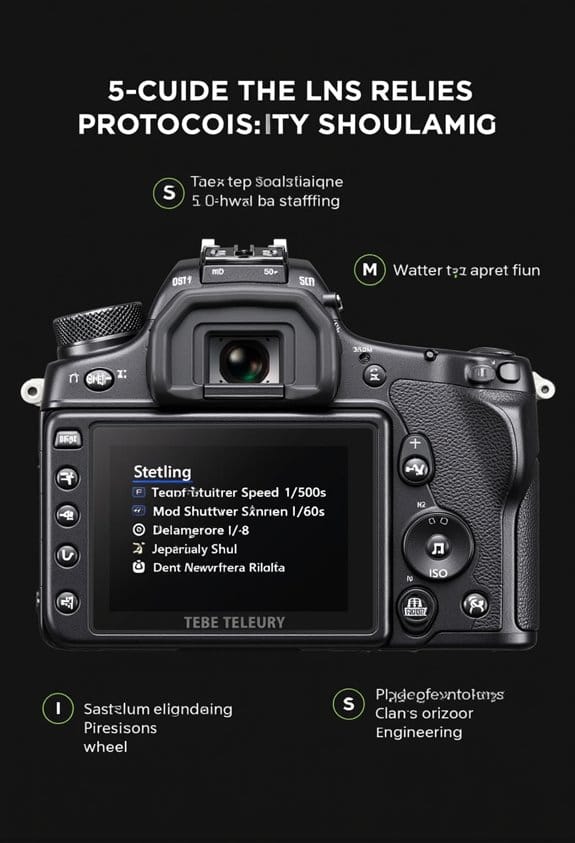
So, you want to get into street photography? Choosing the right camera mode is key to capturing those spontaneous and lively moments you often see in bustling city streets. I usually recommend starting with Aperture Priority mode. This setting lets you control the depth of field, which means you can blur the background and make your subject stand out. A good go-to aperture is around f/8, as it provides a nice balance for most daylight situations.
If you’re feeling a bit more adventurous and want full control over your shots, give Manual mode a try. This allows you to tweak both the aperture and shutter speed, letting you play around with your creative vision. For instance, if you want to capture a fast-moving bus, you might set a quicker shutter speed to freeze the action.
Now, when the sun starts to set and light levels drop, Shutter Priority mode can be a lifesaver. It lets you set a fast shutter speed to ensure you don’t miss those fleeting moments. Pair this with Auto ISO, and your camera will adjust to the lighting changes for you. Also, don’t forget about exposure compensation—this little tool can help you quickly adjust your settings when you’re dealing with tricky lighting, like shooting directly into the sun or in shadowy areas.
To keep your shots steady and smooth, especially in dynamic street scenes, consider using a 3-axis stabilization system found in many DSLR gimbals.
As you start experimenting with these modes, you’ll find what works best for your style. Let’s explore some practical tips for getting great shots in various street situations next!
Recommended Aperture for Street Photography

Hey! So, when it comes to street photography, the aperture setting is crucial. I usually recommend going for around f/8. This is a sweet spot because it gives you a great depth of field, meaning everything from the front of your shot to the background stays sharp. For instance, if you’re photographing a bustling street scene, f/8 allows you to capture your subject in focus while also showing the vibrant surroundings, telling a more complete story.
Now, if you’re in a dimly lit alley or during that golden hour, you might want to open up your aperture to something wider, like f/2.8. This really helps when you want to isolate your subject and create that dreamy, blurred background effect. Imagine capturing a street musician with the city lights softly glowing behind them—it can add so much emotional depth to your shot.
Finding the right aperture really impacts the way you tell your story in photos. It’s all about balancing clarity and focus with the mood you want to create. And that choice reflects your unique style and perspective as a photographer. So, keep experimenting, and you’ll find what works best for you! Using lenses with a wide aperture like f/2.8 also enhances light capture, which is essential in low-light street photography.
Optimal Shutter Speed for Capturing Action

When you’re out there capturing street photography, timing is everything, especially when you’re faced with all the hustle and bustle—think crowded streets or speeding cars. To really freeze those action-packed moments, you need to pay attention to your shutter speed. A good rule of thumb is to set it to at least 1/125s; that usually gets you sharper photos. But if you’re dealing with something really fast, like a cyclist zooming by, aim for 1/250s or even faster. For example, cranking it up to 1/500s can seriously help you catch those split-second moments without any blur.
Now, if you’re feeling a little artsy and want to convey movement, you might drop to around 1/160s to create some cool effects like sweeping motion. Just remember, when the scene is dynamic, faster shutter speeds are a must. Also, a handy tip: try to keep your shutter speed above the reciprocal of your lens focal length. So if you’re shooting with a 50mm lens, your shutter speed should be 1/50s or faster to help avoid camera shake.
The beauty of understanding shutter speed is that it opens up a lot of creative possibilities. Whether you’re freezing a moment or capturing the fluidity of movement, it all boils down to knowing how to play with those settings. So, let’s talk about how to combine all this with composition for even more engaging photos! Additionally, selecting a zoom lens with an appropriate focal length range can greatly influence your ability to capture fast-moving street scenes effectively.
ISO Settings for Varying Light Conditions
Hey, have you ever wondered how ISO settings can make or break your street photography? Understanding ISO is super important, especially when you’re out and about in the city where lighting can change in an instant. For instance, on a bright sunny day, it’s best to stick to an ISO of 200 or even lower. This way, your shots maintain their crisp quality and don’t have that pesky noise that can pop up in your images.
Now, let’s talk about low-light situations—think late-night street shots or cozy indoor scenes. Here, you’ll want to crank up your ISO to around 1600 or even 3200. Why? Because this lets you capture those moments without having to rely on long shutter speeds, which can lead to blurry images. For those magical twilight shots, an ISO of 800 is perfect. It gives you beautiful tones while still allowing for those quicker shutter speeds to freeze the action.
Another handy tip is to use Auto ISO on your camera. This feature adjusts the ISO automatically between 160 and 3200, making it easier to adapt to changing light conditions while you’re out and snapping candid photos. Just keep in mind that higher ISO settings can introduce some noise, which might affect image quality. Incorporating knowledge of exposure fundamentals will help you balance ISO with shutter speed and aperture for the best results. All of this just makes photography more of a fluid experience, don’t you think? Speaking of capturing moments, let’s explore how shutter speed plays into the mix.
Focus Mode: Manual Zone Focusing Explained
Hey there! Have you ever heard of manual zone focusing in street photography? It’s a neat trick that can really improve your chances of capturing those fleeting moments. Essentially, you set your lens to focus at a specific distance beforehand, creating a sort of “sweet spot” where everything will be sharp. This is super handy when you’re trying to photograph strangers, as it cuts down on the lag you’d usually get with autofocus—so you can snap that perfect shot without missing a beat!
To get the most out of zone focusing, you can use a tool like DOFMaster to calculate your depth of field. This helps you figure out where to set your focus, ensuring that you’re ready for subjects that might be anywhere from a few feet away to around ten feet. For example, if you know you’re often shooting people walking down a street, just set your focus to around 5 feet. With the right shutter speed, you’re not only speeding up your shooting but also making it easier to capture those spontaneous interactions.
Also, having a reliable source of power on the go, such as a high capacity power bank, ensures your camera gear and devices stay charged during long street photography sessions.
White Balance: Finding the Right Setting
Hey there! Let’s chat about white balance—it’s super important for getting those colors just right in street photography. When you’re out snapping away, especially in bustling environments, using auto white balance can save you a lot of time. It adjusts on the fly, so you won’t have to fuss with settings while trying to catch that perfect moment.
But here’s a tip: if you’re shooting on a bright, sunny day, switching to the sunny mode can really make those colors pop! Just remember, lighting can change throughout the day, so take a moment every so often to check your white balance. If you’re in a situation with mixed lighting—like a street with both sunlight and shadows—using custom settings can help get those colors looking true to life.
And don’t forget to shoot in RAW format! This gives you the flexibility to tweak your white balance during editing, making it easier to correct any color issues. It’s a handy way to ensure your final images reflect what you actually saw. Speaking of seeing, let’s dive into how lighting conditions impact your shots next!
Using a stable tripod with adjustable height can significantly improve shot sharpness when experimenting with custom white balance settings.
Tips for Quick Camera Setup
If you’re looking to make quick camera setups for street photography a breeze, let’s chat about how to get your camera ready. First off, switching to Aperture Priority mode is a smart move. This lets you adjust the aperture while your camera automatically figures out the right shutter speed for you. It’s super handy for those moments when the light changes quickly—like when you’re standing in a shadow and then step into the sunlight.
Now, when you’re capturing action, aim for a shutter speed of at least 1/200s to freeze that moment. For fast-moving subjects, like cyclists zooming by, bump it up to 1/500s. In bright daylight, keep your ISO around 200, but don’t hesitate to boost it a bit in low light conditions—just try to keep it below 3200 to minimize any noise in your photos.
Another tip is to use manual zone focusing; this allows you to pre-focus on a spot where you expect something interesting to happen. Picture this: you’re at a busy intersection, and instead of fumbling with autofocus, you’re ready to snap a candid moment as soon as someone steps into your frame. Also, consider using back-button autofocus and turning on auto ISO. This way, you can make quick adjustments without digging through menus. Choosing a camera with a user-friendly interface can significantly speed up these setup processes, making it easier for beginners to adapt quickly in the field.
Engaging With Your Surroundings
Engaging with our surroundings is so crucial in street photography! When you really tune in to the world around you, you start to notice those amazing moments and interactions that tell a story. For example, if you’re wandering through a bustling market and you see a vendor laughing with a customer, that could be a perfect shot. Just think about it: the emotion there could really resonate in a photo.
When you approach people with a friendly smile, they’re more likely to be open to getting their picture taken. It’s all about connecting a little. You might even join in on local activities, like stopping to buy a snack or even joining a quick dance—this helps you blend in and makes everyone feel a bit more comfortable with you snapping away.
Using manual zone focusing is super handy, too! This lets you pre-focus on spots where you think something interesting might happen—like where kids might run past or where a couple might share a moment. Always keep that camera within reach and stay alert to changes in light, because the right lighting can make a huge difference in your shots.
Also, consider carrying your gear in a durable camera bag that offers easy accessibility and weather protection to stay prepared for any shooting conditions.
Continuous Learning and Experimentation in Street Photography
You know, continuous learning and experimenting are really crucial if you want to get better at street photography. When you go back and look at your old photos, it’s like a treasure hunt! You can spot what you did well and where there’s room for improvement, and that helps you grow as a photographer.
Have you ever thought about joining a workshop? They focus on different street photography techniques, which can really boost your skills and push you to try new things in various locations. For example, you might find yourself experimenting with your camera settings. Changing up the ISO can help you adapt to different lighting conditions and can even inspire a style you didn’t know you had.
Getting feedback from friends or fellow photographers is super helpful, too. It’s like having a supportive crew that helps you refine your skills. Plus, trying creative challenges, like focusing exclusively on street portraits or capturing interesting shadows for a week, can spark new ideas and keep your passion for photography alive.
Using a photography cheat sheet while shooting can be a handy way to quickly reference essential settings and tips, boosting your confidence on the street.
Frequently Asked Questions
What Are the Best Settings for Street Photography?
So, we’re not trying to snap blurry masterpieces, right? For street photography, let’s stick to Aperture Priority, a slick shutter speed to catch candid moments, and ISO levels that dance with natural light while maximizing emotional impact!
What Is the 20 60 20 Rule in Photography?
The 20 60 20 breakdown teaches us that in photography, we’ll have a balance of excellent, good, and less favorable shots. It encourages us to focus on composition, lighting conditions, and capturing emotional moments effectively.
What Is the Number One Rule of Street Photography?
The number one rule of street photography’s capturing candid moments. We must embrace our urban landscapes, using composition tips, storytelling techniques, and equipment essentials, while considering ethical obligations and tackling lighting challenges with patience and observance.
What Are the Settings for Fast Photography?
Did you know 80% of our best shots come from quick reactions? We should set our cameras to Aperture Priority, use fast shutter speeds, ISO settings around 1600, and pre-focus for movement capture.


